Category: Uncategorized

  • How Custom Kitchens are Revolutionising Business Environments

    Imagine walking into your workplace and being greeted by a custom kitchen that feels less like an office and more like the heart of a home. Bespoke kitchens are not just about exceptional design; they are a revolution in business environments, fostering collaboration and comfort. These tailored spaces encourage creativity, improve employee well-being, and elevate overall productivity.

    Custom kitchens in business settings create unique opportunities for team bonding and spontaneous meetings. These innovative spaces are crafted to suit your specific needs, whether it’s for morning coffee breaks or full team lunches. By integrating these tailored kitchens, you cultivate an environment where employees feel valued and inspired.

    Innovation in office design, such as custom kitchens, shifts the traditional workspace into a more adaptable and enjoyable setting. This transformation leads to higher job satisfaction and retention, making it a smart investment for any forward-thinking business. As you explore how these bespoke spaces can redefine your office, the potential benefits for both morale and efficiency become clear.

    The Rise of Custom Kitchen Designs in Business

    Custom kitchen designs are transforming business environments through innovation, quality, and efficiency. This movement contrasts with traditional setups by integrating modern technology and sustainable practices.

    Driving Factors Behind the Popularity

    One of the key factors is the ability to tailor solutions to specific business needs. With JD Kitchens Dublin, you can create a workspace that enhances productivity and reflects your brand identity. High-quality materials ensure longevity and durability, reducing the need for frequent replacements.

    Incorporating advanced technology like smart appliances and energy-efficient systems makes daily operations smoother. Raised awareness around sustainability encourages businesses to opt for eco-friendly materials and energy-saving practices, which are both beneficial for the environment and cost-effective in the long run.

    Comparing Bespoke and Traditional Options

    Bespoke kitchens offer unparalleled customisation and adaptability, allowing you to design a kitchen that meets your exact requirements. This contrasts starkly with traditional kitchens, which often come with limitations in layout and functionality. Custom options enable better space utilisation and a seamless blend with your existing decor.

    Quality is another significant differentiator. Traditional options may fall short in this regard, often using standard materials and designs that wear out more quickly.

    Efficiency is significantly improved in custom designs. Tailored storage solutions and optimised workflows eliminate unnecessary steps, saving time and boosting productivity. This level of efficiency is typically absent from standard kitchen setups, making custom kitchens a valuable investment for modern businesses.

    Incorporating AI and Automation in Modern Kitchens

    A laptop placed on a kitchen countertop

    In modern kitchens, AI and automation are transforming how tasks are performed, enhancing precision and consistency and introducing robotic chefs and smart appliances. This integration is reshaping culinary operations, ensuring optimal efficiency.

    Enhancing Precision and Consistency

    AI in kitchens brings a new level of precision that manual processes often lack. Sensors detect exact ingredient measurements, temperatures, and timings. This ensures dishes are prepared exactly as intended every time.

    Consistency is another benefit. Automated systems replicate recipes without deviations. Imagine creating the perfect steak every time. AI-driven ovens adjust cooking times based on food thickness and composition.

    Sophisticated software analyses cooking patterns and makes recommendations. For instance, it might suggest the perfect time to stir a sauce. Such precision reduces food waste and enhances the overall quality of dishes.

    Robotic Chefs and Smart Appliances

    Robotic arms prepare food with meticulous detail. These machines can chop vegetables, knead dough, or even plate dishes, reducing the need for extensive manual labour. It allows chefs to focus on more creative aspects of cooking.

    Smart kitchen appliances are also making significant impacts. Fridges monitor their contents and suggest recipes based on what’s available. Ovens can be preheated remotely, and dishwashers optimise water usage based on load.

    Integrating these technologies streamlines operations. It also maintains hygiene standards, as machines are less prone to the contamination humans might introduce. By leveraging robotic chefs and smart appliances, kitchens are becoming hubs of efficiency and innovation.

    Optimising Commercial Kitchen Layouts for Operational Workflow

    Creating an efficient commercial kitchen layout involves carefully planning to enhance operational workflow and maintain safety and food safety standards. This ensures that tasks are performed efficiently while reducing waste and accidents.

    Streamlining Operations and Reducing Waste

    Efficient kitchen layouts streamline operations by strategically placing equipment and workstations. You’ll want to position frequently used items like ovens, sinks, and refrigerators where they can be easily accessed. This reduces movement, saving time and effort.

    Consider the “work triangle” concept, where the sink, stove, and refrigerator form a triangle. This simplifies cooking tasks and minimises unnecessary steps. Adequate storage solutions for ingredients and tools help in organising the space, preventing clutter and reducing waste.

    Proper planning of waste management systems, such as designated bins and composting areas, further reduces waste. Training staff to follow these systems ensures the entire team works cohesively and efficiently.

    Safety and Food Safety Considerations

    A top priority in any commercial kitchen is safety and food safety. Proper layout planning can prevent accidents and health code violations. Ensure there are clear pathways free from obstacles to minimise tripping hazards.

    Install non-slip flooring and adequate lighting to keep the space safe. Designate specific areas for raw and cooked foods to prevent cross-contamination. Handwashing stations should be strategically placed and easily accessible to maintain hygiene standards.

    Tools and equipment need to be stored safely and correctly. Fire safety measures, like accessible extinguishers and clear exits, are essential. Emphasising these considerations creates a safer, more efficient working environment for your staff.

    Eco-Friendly Practices: Sustainability in Kitchen Design

    In recent years, custom kitchen designs have increasingly focused on implementing sustainable practices. These advances are visible in two main areas: energy-efficient equipment and waste management.

    Energy-Efficient Equipment and Practices

    When designing a custom kitchen, integrating energy-efficient equipment can make a significant impact. Modern refrigeration units, induction cooktops, and dishwashers are now designed to consume less energy. LED lighting options also play a crucial role. They use up to 90% less energy than traditional incandescent bulbs and have a longer lifespan.

    Water conservation is another essential component. You might consider installing low-flow faucets and energy-efficient appliances, like dishwashers that use less water. By implementing these practices, you don’t just lower utility bills but also significantly reduce your environmental footprint.

    Waste Management and Recycling Initiatives

    Proper waste management and recycling are central to sustainability in kitchen design. Setting up organised bins for recycling and composting can streamline waste disposal. Composting food waste reduces the volume of rubbish sent to landfills and provides nutrients back to the soil.

    Using cabinets designed to accommodate segregated waste bins can simplify your recycling efforts. Choosing materials for your custom kitchen that are recyclable or have been recycled can also make a substantial difference. By integrating these initiatives, you contribute positively to environmental sustainability.

    Enhancing the Dining Experience Through Design and Technology

    By using modern design and technology, you can transform the dining space into a unique and engaging environment. This involves not just visual aesthetics but also the practical application of interactive and sensory elements.

    The Role of Sensory Design

    Sensory design enhances the dining experience by engaging multiple senses beyond just taste. Integrating elements such as soft lighting, pleasant background music, and textured surfaces can transform the atmosphere.

    When designing a stylish kitchen, consider how the aroma of freshly cooked meals can be carried throughout the space with proper ventilation. The tactile feel of different materials like polished wood or sleek marble can add an extra layer of sophistication and comfort.

    Even the acoustics of the kitchen and dining area play a role. Sound-absorbing materials can reduce unwanted noise, making conversations more enjoyable. A thoughtful approach to sensory design fosters a welcoming environment that’s both functional and enchanting.

    Innovations in Dining and Kitchen Interactivity

    Modern technology allows for interactive experiences that can elevate your kitchen and dining space. Smart appliances, such as touch-screen refrigerators and voice-activated assistants, seamlessly integrate into your daily routines.

    Consider using augmented reality (AR) to visualise different layouts when designing a stylish kitchen. This can help you make informed decisions on the placement of appliances and furniture. Interactive dining tables with built-in touch screens offer endless possibilities, from displaying recipes to playing games.

    Implementing flexible kitchen designs allows you to easily adapt the space for various functions. Customisable lighting and heating settings can be adjusted to match different dining occasions, enhancing comfort and efficiency for you and your guests.

    How Bespoke Commercial Kitchens are Influencing Hospitality Trends

    Bespoke commercial kitchens are transforming the landscape of hospitality by enabling restaurants to cater to diverse culinary preferences and enhancing customer service experiences, which, in turn, impacts reviews.

    Catering to Diverse Menus and Culinary Demands

    With bespoke kitchens, you can customise the layout and equipment to suit your unique culinary needs. This flexibility allows you to create a variety of dishes without compromising on quality. Many restaurants are now able to offer extensive and diverse menus, attracting a wider range of customers.

    Investing in bespoke kitchens enables you to optimise workflow and enhance efficiency. Tailored kitchen layouts reduce preparation time and minimise staff movement. Additionally, specialised equipment supports the preparation of complex dishes, which would be challenging with conventional setups.

    By accommodating various dietary requirements and cuisines, bespoke kitchens allow you to stay ahead of culinary trends. The ability to adapt to changing food preferences helps you maintain customer interest and satisfaction.

    The Impact on Restaurant Reviews and Customer Service

    Custom kitchens contribute significantly to improving customer service. A well-organised kitchen ensures timely preparation and delivery of meals, which enhances the dining experience. Happy customers are more likely to leave positive reviews, boosting your restaurant’s reputation.

    Efficient kitchen designs help reduce errors and maintain consistent food quality. This consistency is critical for earning favourable reviews and fostering repeat business. The attention to detail and high standards achieved through bespoke kitchens make a lasting impression on diners.

    Incorporating state-of-the-art equipment and innovative layouts can also be a unique selling point. When customers notice the seamless operation and quality of food, they are more inclined to share their experiences, thereby attracting new patrons to your restaurant.

    Conclusion

    Custom kitchens can help you make your mark in the business landscape by providing unique and personalised solutions.

    By integrating bespoke kitchen designs, you create spaces tailored to your needs. This not only enhances functionality but also leaves a lasting impression on clients and employees alike.

    Innovation in kitchen design reflects your commitment to quality and style, promoting a dynamic business environment.

    The blend of practicality and aesthetics in a custom kitchen supports a vibrant lifestyle, fostering creativity and productivity in the workplace.


  • A Complete Guide to Business Relocation

    Relocating your business is a significant decision that comes with both opportunities and challenges. It’s a process that demands careful planning and consideration of numerous factors to ensure a transition that is as smooth as possible. From selecting the perfect new location that aligns with your business objectives to handling logistics and minimising operational downtime, every step should be meticulously strategized.

    As you embark on the journey of moving your company, you’ll need to stay informed about the various processes involved. These range from the practicalities of physical moving to the legal implications and the impact it may have on your employees and customers. Support and understanding throughout this period are crucial for maintaining the stability of your business.

    Handling the complexity of a business move doesn’t have to be a daunting endeavour. With the right guidance and resources at your disposal, you can navigate through the transition with confidence. This guide aims to equip you with the knowledge required to manage your business relocation effectively, ensuring that your company thrives in its new home.

    Assessing the Need for Relocation

    Before making a significant decision such as relocating your business, it’s crucial to carefully evaluate the reasons and implications. An in-depth look at costs, stakeholders, and market dynamics ensures your move is strategic and beneficial.

    Conducting Cost-Benefit Analysis

    To determine if relocation makes financial sense for you, conduct a thorough cost-benefit analysis. Estimate the expenses associated with moving, such as lease termination fees, moving costs, and the price of new premises. Then, weigh these against the potential benefits, like lower operational costs, tax advantages, and increased revenue opportunities in the new location. Your aim here is to see a compelling financial upside before proceeding.

    Evaluating the Impact on Stakeholders

    Consider how relocation would affect those with an interest in your company. This includes your employees, suppliers, customers, and investors. You’ll want to gauge employee willingness to move or commute, as this could impact staff retention and recruitment. Discuss with your suppliers and customers how the move might alter service delivery or product availability. Open lines of communication help manage expectations and maintain strong relationships.

    Understanding the Local Market and Labour Market

    Researching the local and labour markets of your prospective new area is non-negotiable. Assess the local market demand for your products or services and analyse whether your target market’s needs are sufficiently met. In addition, investigate the labour market to ensure that you have access to a skilled workforce. This knowledge supports informed decisions about the feasibility of your business’s growth and success in the new location.

    Creating a Comprehensive Relocation Plan

    A group of people using a white board to come up with a plan

    When you’re planning to move your business, crafting a structured relocation plan is essential. You’ll need to map out every step, from budgeting to the minute you open your doors at the new site.

    Timeline and Milestones

    Your relocation plan begins with a timeline. Outline significant milestones, such as when to finalise your new lease, notify your employees, begin packing, and when the move should be completed. An example timeline might look like this:

    • Lease Finalisation: 1 April
    • Employee Notification: 15 April
    • Packing Start Date: 1 June
    • Move Date: 1 July
    • Operations Resume: 5 July 

    Budgeting for the Move

    Relocation isn’t inexpensive, and to ensure financial clarity, you must prepare a detailed budget. Include costs such as professional movers, transportation, insurance, and potential storage. You should also reserve a contingency fund for unexpected expenses.

    • Estimated Moving Costs: €17,500
    • Insurance: €2,300
    • Storage (if needed): €1,200
    • Contingency Fund: €5,800
    • Total Estimated Budget: €26,800

    Selecting the New Location

    Identifying the right new location is critical and should align with your strategic goals. Consider factors like customer accessibility, market presence, real estate values, and proximity to suppliers. You want your new site to support business growth and enhance operational efficiency.

    Planning for Office Layout and Furnishings

    Moving an office means considering space planning and furniture needs. You might repurpose existing furnishings or invest in new ones. Either way, create a detailed layout plan for your new office that promotes productivity. Consider collaborating with an interior designer to optimise the use of space.

    Office Layout Considerations:

    • Employee Workstations
    • Common Areas
    • Meeting Rooms
    • Storage Spaces

    Furniture Checklist:

    • Desks and chairs
    • File Cabinets
    • Reception Area Sofa and Tables

    Remember, planning is paramount. Your detailed, step-by-step relocation plan will guide you smoothly through the moving process.

    Preparation and Logistics Management

    A photo of a small white truck moving down the street

    Effective preparation and logistics management are crucial when you’re planning a business relocation. You’ll want to ensure a smooth transition with minimal downtime, and addressing each element properly is essential for that.

    Choosing a Professional Moving Company

    Selecting a credible moving company, such as Halton Removals Ireland, is the first step towards a successful business move. Research companies that specialise in office relocations and offer comprehensive services, including logistics planning. Verify their credentials, read customer reviews, and request detailed quotes. Interview your top choices and discuss your specific needs to ensure they can handle your business equipment and furniture with care and efficiency.

    Inventory and Packing

    Carefully manage inventory and packing to safeguard your assets during the move. Create a comprehensive moving checklist that categorises items and their condition before packing. Use sturdy boxes and bubble wrap for protection and label everything clearly to streamline unpacking. Coordinate with your chosen moving company to ascertain if they provide packing and unpacking services, which can significantly reduce your workload.

    Handling Utilities and Services

    To avoid disruptions, handle utilities and services well in advance. Notify your current and future utility providers of the move dates to ensure that services like electricity, water, and internet are disconnected at your old location and set up at the new one before your arrival. It’s also important to update your business address for subscriptions and postal services to maintain uninterrupted service.

    Securing Necessary Permits and Insurance

    Lastly, secure all necessary permits for the move, especially if you’re relocating to a different city or council area. Consult with local authorities about parking permits for moving vehicles, and other required documentation. Arranging comprehensive insurance to cover your items during transit is also critical. Confirm with your chosen moving company about their insurance policies and consider additional coverage if needed.

    Minimising Disruption During the Move

    When your business is on the move, it’s essential to ensure that both your clients and employees are kept in the loop, and operations continue smoothly. Quick and efficient set-up of IT and security is critical to avoid costly downtime.

    Ensuring Client and Employee Communication

    Your clients count on your services, and employees are the backbone of your business. Start by drafting a detailed communication plan that details who will communicate with clients and staff, when, and how often. Personalise email templates to inform clients about how the move might affect them and assure them that measures are in place to maintain service levels. For your team, consider setting up a dedicated internal web page or chat group that provides moving updates, timelines, and frequently asked questions to address their concerns. Remember to be transparent and provide continuous updates to maintain trust and demonstrate that you value their experience during this transition.

    Maintaining Business Operations

    Maintaining productivity is a priority to keep disruption at bay. Look into options for remote work to ensure tasks can continue while the physical office is in transition. Create and share a clear schedule for each department, highlighting deadlines to complete specific tasks and defining which tasks are high priority. Assign coordinators for each team to oversee the completion of tasks and to act as go-to points for any disruptions that may occur. This will help in identifying any potential problems quickly and ensure operations carry on with minimal interference.

    Setting Up IT and Security Systems

    The sooner your IT and security systems are functional at the new location, the less the interruption to your workflow. Work with your IT team to create an inventory of all the technical equipment and software licences you have. Coordinate with them to schedule the disconnection, transportation, and reconnection of your tech infrastructure. Plan for backups of all critical data to prevent losses during the move, underscoring the importance of data backup for business continuity. Engage a professional security company to assess the new premises for any security weaknesses and install necessary systems before you move in. This keeps your data and physical assets safe throughout the moving process, providing peace of mind for you, your employees, and your clients.

    Settling into the New Premises

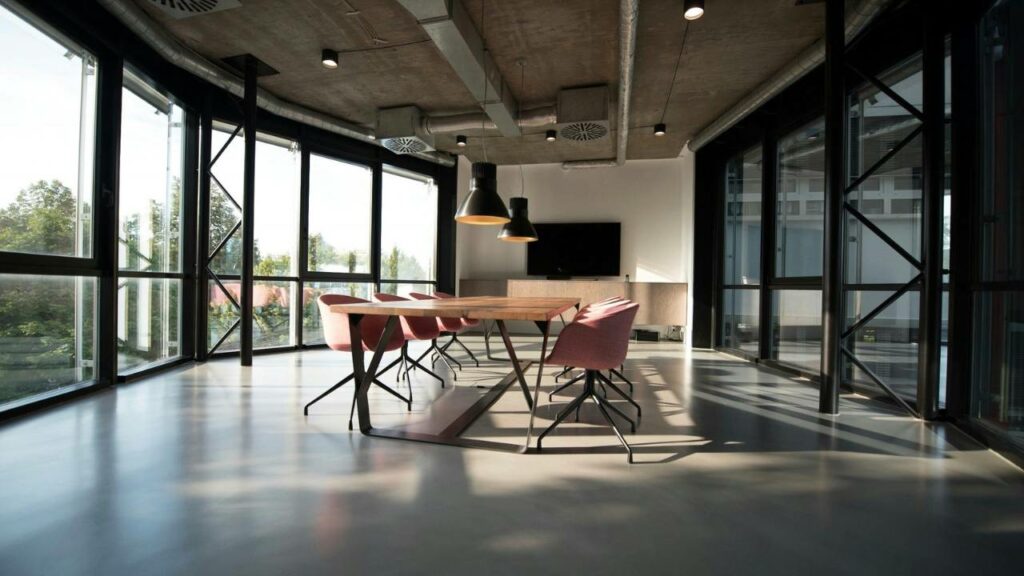
    A photo of a spacious conference room with a table and chairs

    When you’re moving your business, the process of settling into the new premises is just as critical as the move itself. Careful orchestration will ensure a smooth transition into your new office, providing a positive impact on your quality of life and work.

    Early Planning for a Coordinated Move-In

    To ease your transition, start planning the move to your new office well in advance. It’s vital that the size and layout of the new premises are considered to ensure a seamless fit for your furniture and equipment. Chart out the placement of desks, communal areas, and storage—this will allow for an organised approach on move-in day. Consider the access points and transport links of the new location to facilitate easy movement of items and to allow staff to plan their new commute.

    Adjusting to the New Environment and Quality of Life

    Once in the new space, give yourself time to adjust to the environment. It might feel different initially, but creating a comfortable and healthy workspace can significantly increase quality of life for you and your staff. Ensure ample natural light, optimise workspace layout for collaboration or concentration (depending on your business needs), and explore the amenities nearby. These adjustments will reinforce a sense of well-being and help everyone settle in.

    Post-Move Cleaning and Organisation

    After the physical move, your new office will need a thorough cleaning to prepare it for a fresh start. Hiring professional cleaners can provide a deep clean of the space, giving you a pristine environment to work in. Following the clean, the organisation of your workspace is crucial. Establish a designated place for everything and encourage your team to maintain order, making your new premises not just a new office, but a second home for your business ventures.

    Conclusion

    Relocating your business is a major milestone requiring thoughtful planning for both opportunities and challenges ahead. 

    Ensure your budget is in order to prevent financial surprises. Keep your team informed on plans to maintain morale. Properly schedule logistics to minimise downtime and disruption. Mind legal and compliance regulations to avoid pitfalls. Remain adaptable as unexpected situations may still arise. 

    View this not just as a change of address but a growth opportunity. With diligence, your new location can springboard your business’s next successful phase.

  • The Influence of Shop-Fitting on Retail Success

    Shop-fitting can be the secret ingredient to turning a casual browser into a loyal customer. It’s all about creating an inviting atmosphere that captures the essence of your brand and showcases your products in the best possible light. When you think about the layout, lighting and fixtures in your shop, you’re not just considering the aesthetics; you’re designing a situation that optimises your customers’ shopping experience, influences their purchasing decisions and ultimately contributes to the success of your retail business.

    The Importance of Store Design in Retail Success

    Store design plays a crucial role in the retail success by enhancing customer experience and solidifying brand identity. An effective store layout and inviting aesthetic work hand-in-hand to attract and retain customers.

    Strategic Layout and Customer Navigation

    When you walk into a retail space, the strategic layout guides your journey around the store. Retail shopfitters, like the well-known company 3 Rock, realise that a store should be designed to lead customers smoothly from the entrance to high-interest products and towards the point of sale. For instance:

    • Entrance Area: Right at the outset, you’re welcomed by a decompression zone. This is an open space that allows you to adapt to the new environment and start your shopping experience on a positive note.
    • Main Aisle: Following the main aisle, which typically showcases key products, influences your path and exposure to various items.
    • Departmental Signage: Clearly visible signs help in efficiently navigating different sections of the store.

    Aesthetic Appeal and Brand Identity

    The aesthetic appeal of a store isn’t just about looking good; it’s about conveying the essence of your brand. Your store’s design communicates who you are and what you stand for to the customer. In essence, it helps build a brand in the minds of consumers.

    • Colour Scheme: Utilise your brand colours consistently across the store to create a strong visual identity.
    • Lighting: Good lighting not only brightens up the space but also highlights products, creating ambience and focus where needed.
    • Furnishings and Fittings: These are the finer details that nuance your brand’s aesthetic, from sleek shelving to cosy seating areas that invite customers to linger longer.

    Technological Integration in Shop-Fitting

    The incredible importance of technology’s role in modern construction is the most obvious in the realm of shop-fitting. Embracing technology not only shapes the shopping experience but also streamlines store operations. Keeping pace with digital trends and automated processes can markedly influence your retail success.

    Digital Advancements in Retail Spaces

    The integration of digital devices such as interactive kiosks and augmented reality (AR) stations invites you, the customer, to engage with products in a novel way. Interactive displays can offer you personalised recommendations and detailed product information at a touch, enhancing your shopping experience.

    Smart shelving, equipped with weight sensors and digital price tags, allows for real-time inventory tracking and dynamic pricing. This technology aids in maintaining stock levels and can attract your attention with promotions based on consumer behaviour insights.

    Automation and Efficiency

    Automation in shop-fitting streamlines operations and can significantly increase the efficiency of the retail space. Self-checkout systems, outfitted with user-friendly interfaces, empower you to complete purchases with ease, reducing wait times and increasing turnover rates.

    Inventory management robots, working behind the scenes, ensure products are always available, directly affecting your satisfaction. These automated systems can rapidly locate and restock items, making sure that what you seek is always on the shelf.

    Incorporating technology into shop-fitting aspects not only augments the ambience of the store but also provides tangible benefits to both consumer and retailer, driving the retail industry forward.

    Consumer Preferences and Behaviour

    A woman browses sweets in a supermarket

    In retail, your shop fit-out can greatly influence purchasing decisions. It’s essential to align your store’s design with what your customers prefer and how they behave.

    Aligning Design with Target Market

    Your store’s design should resonate with your target demographic. If you’re aiming to attract a younger audience, incorporating technology and interactive displays may increase engagement. For a more affluent customer base, a minimalistic design with high-end fixtures can create an inviting, exclusive atmosphere.

    • Who they are: Identify age, gender, income level, and lifestyle.
    • What they value: Comfort, convenience, luxury, or sustainability.
    • How to cater to them: Through layout, lighting, and curated experiences.

    Influence of Trends on Consumer Expectations

    Consumer expectations are not static; they evolve with trends. You must stay updated with retail design trends that align with your customers’ expectations to remain competitive.

    • Current trends influencing behaviour:
      • Sustainability – Eco-friendly materials and green spaces.
      • Personalisation – Tailored experiences and customised services.
      • Technology – Interactive screens and digitised payment options.

    Impact of Shop Fitting on Retail Operations

    Your shop’s layout plays a crucial role in operational efficiency and customer experience. The right fittings can enhance the flow of in-store traffic, aid in effective inventory management, and make products more accessible.

    In-Store Traffic Flow and Merchandising

    With a thoughtfully designed layout, you can guide your customers through the store, ensuring they encounter key merchandise. Shelving units, display tables, and promotional stands must be placed strategically to create an intuitive flow that subtly leads customers to high-priority products.

    • Aisle Space – Keep it ample for comfortable navigation.
    • High-Impact Areas – Place popular items where they’re most seen.
    • Visibility – Ensure that your products can be easily seen and reached.

    Consider the supply chain and merchandising in your layout decisions. Efficient shop fittings can help reduce restocking times and enhance the presentation of new stock.

    Inventory Management and Product Accessibility

    When you optimise your shop fittings – especially in today’s post-pandemic economy – you make the best use of your space. Clear and accessible product placement supports faster inventory turnover, which in turn can lead to a more responsive supply chain.

    • Storage Solutions: Use vertical space with high shelving for overstock.
    • Easy Access: Ensure employees can quickly restock items without disrupting the shopping experience.

    Inventory management is about maintaining the right balance. Keep fast-moving items accessible to keep shelves stocked and use inventory data to adjust your shop fitting strategy where necessary.

    Adapting to Market Conditions

    A woman paying with her smartphone

    In today’s rapidly evolving retail landscape, your ability to adapt to market conditions is crucial for success. Changes brought about by the pandemic and the need for integrated online retail solutions are especially significant.

    Pandemic-Driven Changes in Retail

    The Covid-19 pandemic has irreversibly altered the way you engage with physical shops. Firstly, social distancing measures have made ‘contactless’ experiences preferable. Shops responded by implementing:

    • Automated entry and payment systems
    • Larger aisle spaces for safe navigation

    Secondly, there has been a surge in hygiene-focused shop-fitting designs. This includes:

    • Installations of sanitation stations
    • Surfaces treated with antimicrobial coatings

    Omnichannel Strategies and Online Integration

    With the rise of online retail, your shop must deliver a seamless experience across all platforms. Omnichannel strategies allow consumers to engage with your brand through multiple touchpoints. This might involve:

    • In-store pickup options for online purchases
    • Interactive digital displays linked to your online catalogue

    Online integration also means your physical shop should be optimised for digital efficiency with features such as:

    • QR codes that connect to online deals
    • Tablets for instant access to your wider inventory

    Your shop’s layout and technologies are now expected to facilitate an integrated buying journey, combining the best of online convenience and in-store experience.

    Financial Considerations of Shop Fitting

    Investing in shop fitting is crucial for your retail success, balancing aesthetics with functionality to ensure cost-effectiveness and influence customer perception of value.

    Cost-Benefit Analysis of Design Investments

    When you’re assessing the cost-benefit of your design investments, you’re looking at how every pound spent can potentially return more in sales. Initial costs include the design, materials, and labour, while anticipated benefits could be higher foot traffic and increased average transaction values.

    • Initial Investment:
      • Design Costs: Professional fees or software for layout planning.
      • Material Costs: Quality, durability, and aesthetics of fixtures and fittings.
      • Labour: Installation and custom work price.

    • Return on Investment (ROI):
      • Sales Increase: Attributable to improved store layout and design.
      • Customer Retention: Does the environment foster repeat business?
      • Brand Equity: Enhanced perception can justify higher price points.

    It’s also important to consider the longevity of your fit-out against industry trends. Ensure your design remains relevant so the need for frequent renovations doesn’t erode profit margins.

    Pricing Strategy and Value Perception

    Your pricing strategy is inherently linked to the perceived value of your products, and your shop fit-out can influence this perception. Premium materials and a bespoke design often allow for higher pricing due to the improved value perception they create.

    • Premium Pricing:
      • Justified by a luxurious fit-out which elevates the product’s perceived worth.
      • Aligns with a high-end business model.

    • Value-Oriented Pricing:
      • Can be complemented by a cost-effective, smart fit-out.
      • Signals efficiency and savings to price-sensitive customers.

    Measuring the Effectiveness of Shop Fitting

    Shop fitting can profoundly influence your retail business’s success. By analysing specific data points and gathering customer insights, you can evaluate how your shop’s layout and design affect your store’s performance.

    Data Analytics and Performance Metrics

    To understand the impact of your shop fitting, you should integrate data analytics into your evaluation process. Use performance metrics such as sales per square foot, dwell time, and conversion rates to ascertain the effectiveness of different shopfitting elements. For instance:

    • Sales Per Square Foot: This metric will tell you how much revenue is generated for every square foot of floor space.
    • Dwell Time: Longer dwell times can point to a more engaging store layout, which may lead to increased sales.
    • Conversion Rates: Understanding the ratio of store visitors to purchases can indicate whether your shop fitting is conducive to closing sales.

    By employing predictive analytics, you can also forecast future trends and make data-driven decisions to optimise your store layout.

    Customer Feedback and Experiential Measures

    Your customers’ feedback is invaluable. Encourage them to share their in-store experiences, which can provide insights that pure data may not capture. You can collect customer feedback through:

    • Surveys: Short, in-store or post-visit surveys about layout, navigation, and overall shopping experience.
    • Feedback Forms: Digital or physical forms that allow for more detailed customer testimonials.

    Analyse this customer data to understand the sensory and emotional aspects of your shop fitting. Are customers finding their way around easily? Is the store atmosphere inviting? These experiential measures can highlight areas for improvement that may not be immediately evident through quantitative analysis.

    Future Trends in Shop Fitting and Retail Design

    A stylish-looking woman rides an escalator in a shopping mall

    Your retail space needs to adapt to the latest trends and technology to stay ahead. By harnessing emerging innovations and understanding shifts in consumer demands, your shop fitting strategy can greatly influence your retail success.

    Emerging Technologies and Consumer Demands

    Technology is revolutionising how you engage with customers. Interactive displays and virtual reality are not just trends but are becoming essentials in retail environments. They offer immersive experiences that can significantly enhance customer satisfaction. Here’s how you can meet consumers’ growing expectations:

    • Seamless Shopping: Integrating advanced RFID (Radio-Frequency Identification) tags allows for automated checkouts, reducing wait times.
    • Personalised Experience: Using advanced analytics, you can tailor shop layouts and product recommendations for individual customers.

    Imagine your customers walking into your store and being greeted by a smart mirror that suggests products based on their past purchases. The future is here, and it’s all about personalisation and efficiency.

    Leadership and Vision in Retail Innovation

    Strong leadership is fundamental to navigating the evolving retail landscape. Your vision will set the course for adopting new shop-fitting trends. Consider these points for effective leadership in this field:

    • Innovation: Venture beyond traditional designs to incorporate modular fixtures and sustainable materials.
    • Strategy: Employ data from advanced analytics to optimise the store layout according to consumer behaviour patterns.

    Keep in mind that leadership in retail design isn’t just about following trends; it’s about setting them. Your forward-thinking approach can redefine shopping experiences and set new standards in retail.

    Conclusion

    In embracing effective shop-fitting, you elevate the potential for success in your retail business. It extends beyond aesthetics, seamlessly aligning with your business model to shape an environment that positively influences consumer behaviour.

    Every shelf, lighting fixture, and sign becomes a guide in your customers’ journey, enhancing their experience and encouraging exploration and purchase. A meticulously designed space reflects strategic considerations – showcasing products, ensuring comfort in pathways, and maintaining branding consistency.

    Your investment in high-quality shop-fitting echoes the core of your business ethos, demonstrating a commitment to delivering an exceptional in-store experience. It’s not just about selling products; it’s about curating a space that draws customers back time and again.

  • How to Craft a Functional Home Office Space

    Creating a functional home office space is an essential factor in boosting your productivity while working from home. As remote working becomes increasingly popular, it’s important to craft a dedicated space that allows you to focus on your tasks without distractions. We will explore some tips and tricks to help you design an effective home office that suits your individual needs.

    Determining the Right Location

    Obtaining the Permission

    Before settling on a location for your home office, ensure that you have the necessary home office planning permission if you plan to make any structural changes to your space. Consult with local authorities to confirm any zoning or permit requirements. This will save you time, money and future headaches.

    Evaluating Light and Windows

    A crucial part of choosing the right location for your home office is the availability of natural light. Natural light is vital for reducing eye strain and boosting your mood. Ideally, your office should have at least one large window allowing plenty of sunlight to enter the room. If your preferred location is lacking in light, consider adding artificial lighting solutions, such as desk lamps or floor lamps to compensate.

    Evaluate the direction the windows face. South-facing windows will provide plenty of daylight throughout the day, and north-facing windows create a more consistent, diffused light.

    Choosing Between Bedroom and Guest Room

    Deciding between a bedroom and guest room for your home office depends on the size, layout, and personal preference. Here are some points to consider:

    • Bedroom: If you plan to convert a bedroom into a home office, be mindful of the potential impact on your sleep pattern. The association between work and sleep can make it difficult to switch off at night. However, if space is limited, creating a dual-purpose room with a foldaway bed can be a practical solution.
    • Guest Room: A guest room can make an excellent location for a home office. It combines functionality while maintaining the ability to accommodate guests in the remaining space. If the room is spacious enough, consider dedicating one corner for office activities and the other for hosting visitors.

    Designing for Functionality and Comfort

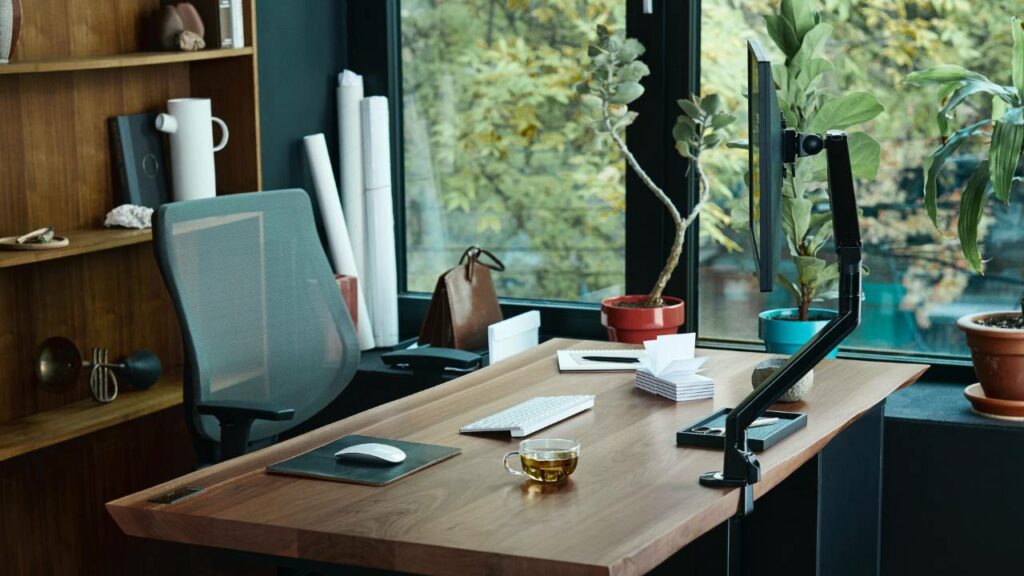
    A home office with plants and a large window

    Selecting the Perfect Desk

    When setting up your home office, the cornerstone of comfort and function is choosing the right desk. Consider whether a traditional or a standing desk best suits your needs. A standing desk can help improve posture and reduce physical discomfort in the long run. However, if you prefer the traditional way, opt for a spacious desk that offers plenty of legroom and room for your peripherals. Keep in mind the importance of storage, such as drawers and shelves, which can greatly enhance the functionality of your workspace.

    Choosing an Ergonomic Chair

    Your office chair plays a crucial role in maintaining comfort throughout the workday. Ergonomic design is vital in preventing strain and promoting productivity. Shoot for a chair that possesses the following features:

    • Adjustable seat height
    • Seat depth flexibility
    • Lumbar support
    • Breathable materials
    • Swivelling and rolling capabilities

    Optimising for Productivity

    To create a workspace that maximises productivity, focus on these elements:

    • Lighting: Make use of natural light where possible. Set your desk near a window or introduce a desk lamp to illuminate your workspace.
    • Organisation: Keep your office organised by having a designated spot for everything like your stationery, documents, and gadgets. Use desk organisers and trays to help keep things tidy and within easy reach.
    • Personal touches: Personalise your space with photos, artwork, or plants. This will make your home office feel more inviting and enjoyable to work in.

    Storage Solutions and Organisation

    When crafting a functional home office space, storage and organisation are key. No one wants their desk to be cluttered with documents, office supplies, and miscellaneous items. By incorporating effective storage solutions, you can create a workspace that is both efficient and visually appealing.

    Ingenious Shelving and Cabinets

    Utilising shelving and cabinets in your home office can make all the difference in keeping your workspace organised. There are countless options to fit your space and aesthetic preferences, from floating shelves to built-in cabinets. Consider the types of items you need to store, and choose your storage options accordingly. For example, if you have a lot of books and files, you might prefer tall bookshelves or cabinets with adjustable shelves. If you need to store smaller items like pens, scissors, and notepads, drawers or built-in cubbies could be a good fit.

    Tip: Remember to make the most of vertical space if you’re working with a small area!

    Utilising Bins and Boxes

    Another effective way to keep your workspace organised is by using bins and boxes. These storage options provide a convenient place for office supplies and ensure they are out of sight when not in use. You can use a variety of materials, such as:

    • Plastic bins
    • Wicker or fabric baskets
    • Cardboard or wooden boxes

    By choosing the right style and size for your needs, you can create a coherent look for your home office and keep all your essential items within arm’s reach.

    Tip: When organising your bins and boxes, try using labels or colour coding systems to further streamline your storage system and make finding items a breeze.

    Personalising Your Space

    A personalised home office

    Choosing Colour and Design

    To create a functional and enjoyable home office space, it’s essential to personalise it with your favourite colours and design elements. Start by selecting a colour scheme that reflects your personality and supports your focus. You might consider a serene, neutral palette or go for more vibrant, energising colours. For added interest, you can experiment with an accent wall or incorporate patterns and textures to your wall space.

    Adding Decorative Elements

    While you don’t have to create a luxury home office, remember that a well-decorated workspace can make your environment feel more inviting and boost your productivity. One idea for personalising your space is to create a gallery wall featuring your favourite artwork, photographs, or inspiring quotes. Remember that it’s your unique space, so select pieces that resonate with you and your style.

    Incorporate textures and patterns in your decor, such as decorative cushions, area rugs, or window treatments, to add warmth and character. If you have a passion for collecting items, you can also showcase your collections in your home office. Keep your items organised and neatly arranged to maintain a professional yet personalised atmosphere.

    Lighting Strategies

    Maximising Natural Light

    Making the most of natural light in your home office is key to creating a comfortable and productive space. Here are some tips to help you maximise natural light:

    • Position your desk near a window: Place your workspace close to a window to enjoy the benefits of natural light and a pleasant view, if possible.
    • Use sheer curtains or blinds: Opt for light, translucent window treatments to allow more sunlight into your office without compromising your privacy.
    • Incorporate mirrors: Strategically placing mirrors opposite windows can reflect and distribute natural light throughout the room, making it appear brighter.
    • Choose light wall colours: Lighter colours, such as white or soft pastel shades, will reflect more light and create a brighter and more pleasant atmosphere.

    Selecting Artificial Light Fixtures

    In addition to natural light, a functional home office requires efficient and well-planned artificial lighting. Consider these factors when selecting light fixtures for your workspace:

    • Layer your lighting: Combining different types of light fixtures can create a more versatile and adaptable environment. Your lighting setup should include ambient lighting, task lighting, and accent lighting. This way, you can adjust the brightness and focus of your workspace according to your needs.
    • Choose energy-efficient technology: Opt for LED bulbs instead of traditional incandescent ones, as they provide bright light while consuming less energy. LED bulbs also last longer, saving you money on replacement costs.
    • Select adjustable fixtures: Desk lamps with adjustable arms and swivelling heads allow you to direct light where it’s needed most, reducing eye strain and glare on your computer screen.
    • Consider temperature and colour: Different light temperatures and colours can affect your mood and productivity. For a home office, a neutral white light is a good choice, as it promotes alertness and focus without being too harsh.

    Technological Considerations

    Computer and Hardware Setup

    When setting up your home office, it’s essential to consider the technology and equipment you’ll need. Start by selecting a computer that meets your needs – be it a laptop or a desktop. If you opt for a desktop, ensure you invest in a quality computer screen, keyboard, and mouse.

    If you’re starting your own home-based business, you may want to check if you’re eligible for any type of government support for entrepreneurs. This could make obtaining proper equipment considerably easier.

    Other essential hardware to consider include:

    • Printer and/or scanner
    • External hard drives or cloud storage for file backup
    • USB hubs and memory card readers
    • Webcam and microphone for virtual meetings
    • Surge protector power strips

    Dealing with Wires and Connectivity

    A clutter-free workspace is crucial for productivity, so it’s essential to manage your office wires and cables efficiently. Follow these simple tips:

    • Choose wireless devices: Whenever possible, opt for wireless equipment like a wireless keyboard, mouse, and printer. This minimises cable clutter.
    • Use cable ties and organisers: Bundle cables together using cable ties or invest in cable organisers to keep them neat and out of sight.
    • Route cables strategically: Plan your cable routes along walls, under desks and use cable management trays to keep them hidden.

    As for connectivity, make sure you have a reliable internet connection to handle your work tasks, virtual meetings, and online communication. Consider investing in a Wi-Fi range extender if your home office is far from the router, or use an Ethernet cable for a more stable connection.

    Creative Use of Limited Space

    A young man working in his home office

    Designing a Small Home Office

    When designing your small home office, it’s essential to make the most of every available nook and cranny. Start by selecting space-saving furniture that serves multiple purposes and utilises vertical space. For instance, you can opt for a compact desk with built-in storage or a wall-mounted floating desk.

    To make even better use of your room’s vertical space, add shelves above your desk. Use these shelves to organise your books, files, and decorative items, effectively reducing clutter and making your workspace more inviting. Remember to position your desk near a window to take advantage of natural light, which not only saves energy but also boosts your mood and productivity.

    Here are some efficient furniture options for your small home office:

    • Corner desks are perfect for utilising unused corners and maximising office space.
    • Folding desks allow you to fold the desk away when not in use, freeing up valuable space.
    • Wall-mounted desks keep the floor area free and can be adjusted to different heights.

    Dual-Purpose Dining and Living Areas

    If you don’t have a dedicated room for your home office, consider turning your dining room or living area into a multi-functional workspace. A flex room is a fantastic way to create versatile spaces that serve various purposes throughout the day.

    One option is to invest in a multipurpose dining table that doubles as a workstation. Choose a table with built-in storage or compartments to keep your office supplies organised and out of sight when not in use. You can also utilise a stylish rolling cart to store your essential tools and move between your office and dining spaces with ease.

    Here are some practical ways to integrate a home office into your dining or living area:

    • Room dividers: Use a folding screen, curtain, or bookshelf as a divider to create a private workspace within a shared living space.
    • Floating shelves: Install floating shelves on the wall to store and display your office essentials without compromising the area’s aesthetic appeal.
    • Invisible storage: Make use of hidden or built-in storage solutions (like an ottoman with storage) to maintain a clean and organised shared space.

    Enhancing Productivity and Focus

    Boosting your productivity and focus are essential for a functional home office space. In this section, we’ll explore how you can organise your documents and supplies and create a clutter-free environment to maximise your efficiency.

    Organising Documents and Supplies

    One of the things that can significantly affect your productivity is having a disorganised workspace. To enhance your efficiency, organise your documents and office supplies in an orderly manner using the tips below:

    • Use document trays or filing cabinets to sort your paperwork in relevant categories such as “To Do”, “In Progress”, or “Completed”.
    • Keep your stationery and small office supplies tidy and accessible by using desk organisers or dedicated storage containers.
    • Label your storage boxes, folders or drawers for quick identification of their contents, making use of a label maker or simply a pen and some stickers.

    Here is a list of useful organisers that can help you maintain an orderly workspace:

    • Letter tray
    • File folder
    • Pen holder
    • Storage box

    Creating a Clutter-Free Environment

    A clutter-free environment is essential for maintaining focus and productivity while working from home. Keep your office space tidy by following these guidelines:

    • Designate a specific spot for every item in your office. Once you’ve finished using an item, return it to its designated space immediately.
    • Declutter regularly by going through your documents and supplies, discarding unnecessary items, and rearranging the items you need to keep.
    • Avoid multitasking and focus on one task at a time. Having too many projects at once can make your workspace feel cluttered and lead to a decrease in efficiency.

    Conclusion

    Crafting a functional home office contributes significantly to your productivity and well-being. Thoughtfully consider components such as ergonomics, lighting, organisation, and design to create an ideal workspace that reflects your personality. 

    A well-designed home office is crucial for maintaining a healthy work-life balance, promoting concentration and motivation. Happy working!

  • The Importance of Government Support for Entrepreneurs

    Government support for entrepreneurs is crucial for several reasons. Firstly, it helps to create a conducive environment for business growth and innovation. This is achieved through the formulation of policies that encourage entrepreneurship, the provision of financial support, and the creation of a regulatory framework that protects and promotes business interests.

    Secondly, government support can help entrepreneurs overcome some of the common challenges they face, such as access to capital, market entry barriers, and knowledge gaps. By providing resources and assistance, governments can help entrepreneurs navigate these challenges and increase their chances of success.

    An Overview of Government Support Mechanisms in Ireland

    Ireland has a robust framework of government support for entrepreneurs. This includes a range of initiatives designed to foster entrepreneurship, such as grants, loans, tax incentives, and advisory services. These mechanisms are aimed at encouraging entrepreneurship, promoting innovation, and facilitating business growth.

    In addition, the government also provides advisory services to help entrepreneurs navigate the business landscape, understand regulatory requirements, and access markets.

    Detailed Analysis of Specific Support Mechanisms

    Businesswoman in Ireland

    While all these support mechanisms play a crucial role in promoting entrepreneurship, one initiative that stands out for its unique approach is a tax incentive known as entrepreneur relief. This initiative is designed to support entrepreneurs by reducing the amount of capital gains tax they have to pay when they sell their business.

    The entrepreneur relief scheme in Ireland allows qualifying entrepreneurs to pay a reduced rate of capital gains tax on the disposal of certain business assets. This can significantly increase the net return on investment for entrepreneurs and provide them with additional capital to reinvest in new business ventures.

    The Impact of Government Support on Business Growth and Sustainability

    Government support mechanisms, such as entrepreneur relief, can have a significant impact on business growth and sustainability. By reducing the financial burden on entrepreneurs, these mechanisms can free up resources that can be reinvested in the business. This can lead to increased innovation, job creation, and economic growth.

    Moreover, government support can also contribute to business sustainability. By providing financial relief and advisory support, governments can help businesses navigate challenges and adapt to changing market conditions. This can enhance business resilience and contribute to long-term sustainability.

    The Future of Entrepreneurship in Ireland

    The future of entrepreneurship in Ireland looks promising, with the government continually working to improve the business environment and provide better support for entrepreneurs. Initiatives like entrepreneur relief are a testament to this commitment.

    As the business landscape evolves, it is expected that the government will continue to introduce new measures and refine existing ones to further bolster the entrepreneurial ecosystem.

    The Role of Advisory Services in Entrepreneurial Success

    Advisory services provided by the government can be a game-changer for entrepreneurs. These services, which include guidance on business planning, regulatory compliance, and market access, can help entrepreneurs navigate the complexities of running a business. By leveraging these services, entrepreneurs can make informed decisions and avoid common pitfalls.

    The Impact of Government Grants and Loans

    Government grants and loans are another crucial form of support for entrepreneurs. These financial resources can help entrepreneurs overcome one of the biggest hurdles in starting a business: access to capital. By providing funds for startups and growth-oriented businesses, the government can stimulate innovation and job creation.

    The Influence of Regulatory Policies on Entrepreneurship

    Regulatory policies can significantly influence the entrepreneurial environment. Policies that reduce bureaucratic red tape and simplify business operations can encourage more individuals to venture into entrepreneurship. On the other hand, overly restrictive regulations can stifle innovation and growth. Therefore, striking the right balance in regulatory policies is crucial for fostering a vibrant entrepreneurial ecosystem.

    The Future of Entrepreneurship: Emerging Trends and Opportunities

    The entrepreneurial landscape is continually evolving, with new trends and opportunities emerging all the time. From the rise of digital technologies to the growing emphasis on sustainability, these trends are reshaping the way businesses operate. By staying abreast of these trends and adapting accordingly, entrepreneurs can position themselves for success in the future.

    The Importance of Networking and Mentorship

    Networking and mentorship opportunities provided by government initiatives can significantly contribute to entrepreneurial success. By connecting with experienced entrepreneurs and industry experts, budding entrepreneurs can gain valuable insights, advice, and support that can help them navigate the entrepreneurial journey.

    The Role of Education and Skill Development Programs

    Government-backed education and skill development programs can play a crucial role in fostering entrepreneurship. These programs can equip entrepreneurs with the necessary skills and knowledge to start and manage a business effectively. They can also help entrepreneurs stay updated with the latest trends and technologies in their industry.

    The Impact of Infrastructure and Technological Support

    Infrastructure and technological support provided by the government can also contribute to entrepreneurial success. This can include everything from providing co-working spaces and research facilities to offering technological resources and support for digital transformation. Such support can help businesses operate more efficiently and stay competitive in the digital age.

    Entrepreneurship and Social Impact

    Entrepreneurship is not just about economic growth; it can also have a significant social impact. Government initiatives that encourage social entrepreneurship can help address various social and environmental issues while also creating economic opportunities. This can lead to a more inclusive and sustainable economy.

    The Role of Policy Consistency and Predictability

    Policy consistency and predictability are crucial for entrepreneurial success. Frequent changes in policies can create uncertainty and pose challenges for businesses. Therefore, maintaining consistency and providing clear communication about policy changes can help entrepreneurs plan their business strategies more effectively.

    Conclusion

    In conclusion, government support plays a crucial role in entrepreneurial success. In Ireland, mechanisms such as entrepreneur relief provide valuable support to entrepreneurs, promoting business growth and sustainability. As the entrepreneurial landscape continues to evolve, the role of government support will remain pivotal in fostering a vibrant and dynamic entrepreneurial ecosystem.

  • The Importance of Data Backup and Recovery for Business Continuity

    In today’s digital landscape, data is the lifeblood of businesses, serving as the foundation for critical operations and decision-making processes. Any unforeseen data loss or disruption can have severe consequences for a company’s productivity, reputation, and overall business continuity.

    That’s why implementing a robust data backup and recovery strategy is of paramount importance for Irish businesses. This article explores the significance of data backup and recovery, specifically tailored to the context of Irish businesses, emphasising the need for proactive measures to ensure seamless operations in the face of data-related challenges.

    Understanding the Risks of Data Loss

    Business data

    Internal Threats

    One of the primary risks to data security comes from within an organization. Accidental deletion, human error, or malicious activities by employees can all lead to data loss. It is crucial for businesses in Ireland to establish protocols and access controls to mitigate such risks effectively.

    External Threats

    Cyber threats such as ransomware attacks, data breaches, and hacking attempts pose significant risks to Irish businesses. With the increasing sophistication of cybercriminals, organisations must adopt proactive measures to safeguard their data from external threats.

    The Consequences of Data Loss

    Operational Disruption

    When critical business data is lost, operations grind to a halt. Companies may face delays in delivering products or services, leading to dissatisfied customers and potential revenue loss. This disruption can severely impact the overall business continuity of Irish organisations.

    Reputational Damage

    Data loss incidents can tarnish a company’s reputation, eroding customer trust and loyalty. In Ireland, where the market is highly competitive and word-of-mouth plays a vital role, businesses cannot afford to overlook the importance of safeguarding sensitive data to maintain their reputation.

    Data Backup Strategies

    Regular Backup Schedule

    Implementing a consistent backup schedule is crucial to ensure that critical data is continuously protected. Irish businesses should define backup intervals based on the frequency of data updates and their recovery time objectives (RTOs). This approach minimises the risk of significant data loss and ensures quick restoration when needed.

    On-site and Off-site Backup

    Adopting a multi-layered backup approach is recommended for Irish businesses. While on-site backups provide quick data restoration, off-site backups offer an additional layer of protection against physical disasters, theft, or hardware failures.

    A combination of local backups and cloud-based solutions, such as those offered by MJ Flood Security systems, can enhance data security and business continuity.

    Redundancy and Version Control

    Maintaining multiple copies of backup data across different locations ensures redundancy, protecting against potential loss in case of a single-point failure.

    Additionally, version control mechanisms help businesses roll back to previous data states if necessary, mitigating the impact of data corruption or unauthorised alterations.

    Testing and Validation

    Regular Recovery Testing

    To ensure the effectiveness of data backup and recovery procedures, Irish businesses should conduct regular recovery testing. Testing helps identify any gaps or issues in the backup system and enables organisations to fine-tune their recovery processes. It is essential to simulate real-life scenarios to evaluate the speed, integrity, and reliability of data recovery.

    Validation of Backups

    Periodically validating backup data integrity is crucial to ensure that backups are complete, accessible, and error-free.

    Irish businesses should implement validation processes that check the consistency and integrity of backup data, thereby reducing the risk of data loss due to corrupt or incomplete backups.

    Compliance and Legal Considerations 

    GDPR

    GDPR Compliance

    For businesses operating in Ireland, compliance with the General Data Protection Regulation (GDPR) is essential.

    Data backup and recovery strategies should align with GDPR requirements, ensuring the protection and privacy of personal data.

    Implementing encryption and access controls for backup data, maintaining data retention policies, and ensuring secure transmission of data are crucial aspects of GDPR compliance.

    Industry-Specific Regulations

    Apart from GDPR, certain industries in Ireland have specific regulations and compliance requirements related to data protection and retention.

    It is vital for businesses to understand and comply with these industry-specific regulations when designing their data backup and recovery strategies. This includes sectors such as healthcare, finance, and legal services, where sensitive data protection is of utmost importance.

    Read our guide to business insurance and our post on the impact of IT outsourcing as well.

    Choosing the Right Backup Solution

    Scalability and Flexibility

    When selecting a data backup solution, scalability and flexibility are key factors to consider. Irish businesses should choose a solution that can accommodate their growing data needs and adapt to changing business requirements.

    Scalable cloud-based backup solutions offer the advantage of on-demand storage expansion without the need for significant infrastructure investments.

    Security Features

    Data security should be a top priority when evaluating backup solutions. Look for features such as end-to-end encryption, secure transmission protocols, and strong access controls to ensure the confidentiality and integrity of backed-up data.

    Additionally, solutions that offer data deduplication and encryption at rest provide an added layer of protection.

    Recovery Time Objectives (RTOs)

    The time it takes to recover data is critical for business continuity. Irish businesses should assess their RTOs, determining how quickly they need to restore data in the event of data loss.

    Backup solutions that offer efficient data indexing, rapid recovery capabilities, and granular restoration options can significantly reduce downtime and minimise the impact on operations.

    Training and Awareness

    Employee training

    Employee Education

    Educating employees about the importance of data backup and recovery is essential to create a culture of data security within an organisation.

    Conduct regular training sessions to raise awareness about the risks of data loss, teach best practices for data backup, and emphasise the role each employee plays in maintaining business continuity through proper data handling.

    Incident Response Planning

    Irish businesses should develop comprehensive incident response plans that outline the steps to be taken in the event of data loss or security breaches.

    Include procedures for data recovery, communication protocols, and responsibilities of key personnel during such incidents. Regularly review and update the incident response plan to address emerging threats and ensure its effectiveness.

    Conclusion

    Data backup and recovery are critical components of ensuring business continuity for Irish organisations. By understanding the risks of data loss, implementing robust backup strategies, conducting regular testing and validation, and complying with legal and industry-specific regulations, businesses can safeguard their valuable data assets.

    Choosing the right backup solution, prioritising employee education, and developing incident response plans further strengthen data security and resilience. By investing in data backup and recovery, Irish businesses can mitigate the potentially devastating consequences of data loss and maintain smooth operations even in the face of unforeseen challenges.

  • Transforming Business Operations: The Impact of IT Outsourcing

    In an increasingly digital world, IT plays a pivotal role in shaping and transforming business operations. From enabling seamless communication to safeguarding critical data, IT systems underpin nearly all aspects of modern businesses.

    However, managing these systems in-house can be a significant undertaking, requiring specialised skills, time, and resources.

    This is where IT outsourcing comes into play. This strategic move can drive operational efficiency, manage costs, enable scalability, and mitigate IT risks. Let’s delve deeper into the transformative impact of IT outsourcing.

    How IT Outsourcing Enhances Operational Efficiency

    For businesses, operational efficiency is key. It’s about maximising outputs and minimising inputs, ensuring that resources are used optimally. IT outsourcing can significantly contribute to this goal.

    Businesses can free up their internal resources by delegating IT tasks to specialised service providers, enabling them to focus on their core competencies. Outsourced IT professionals can streamline processes, automate routine tasks, and swiftly resolve issues, leading to enhanced productivity and efficiency.

    The Role of IT Outsourcing in Cost Management

    Managing costs is a critical aspect of running a business. Maintaining an in-house IT department can be expensive, considering the costs of hiring and training IT staff, procuring equipment, and updating technologies.

    IT outsourcing can offer a cost-effective solution. It allows businesses to convert fixed IT costs into variable costs, enabling them to pay only for the services they need. This flexibility can significantly aid in budget management and cost control, as well as make your business more resilient.

    Business Scalability

    Business Scalability

    In today’s fast-paced business environment, scalability is essential. Businesses need to be able to expand or contract their operations based on market demand.

    IT outsourcing offers scalability, providing businesses with the flexibility to scale their IT services up or down as needed. Whether it’s ramping up IT support during peak periods or rolling out new systems to support expansion, IT service providers can quickly respond to changing business needs.

    Mitigating IT Risks

    In the realm of IT, businesses face numerous risks, from cybersecurity threats to data loss and system downtime. Managing these risks requires specialised knowledge and constant vigilance. This is where IT outsourcing can be of immense value.

    IT service providers, such as Ireland’s leading managed IT services provider, Nostra IT Support, have the expertise to identify potential IT risks and implement robust security measures. They offer round-the-clock monitoring, ensuring that issues are detected and resolved promptly, thereby minimising disruptions to business operations.

    The Future of IT Outsourcing: Trends to Watch

    As we look to the future, IT outsourcing continues to evolve, shaped by emerging technologies and changing business needs. Key trends include the rise of cloud-based services, offering businesses flexible and scalable IT solutions.

    Cybersecurity is another crucial area, with businesses increasingly relying on IT service providers for protection against evolving cyber threats.

    Additionally, the focus of IT outsourcing is shifting from merely providing support to driving innovation, with service providers playing a proactive role in helping businesses leverage technology for growth and competitive advantage.

    Achieving Sustainability Goals through IT Outsourcing

    Sustainability is increasingly important in today’s business landscape, with companies under pressure to reduce their environmental impact. IT can be a significant energy consumer, particularly in larger businesses.

    By outsourcing IT, companies can benefit from the latest energy-efficient technologies and practices used by service providers. This can contribute to a company’s overall sustainability goals, and is another way in which outsourcing IT can positively impact business operations.

    A Catalyst for Innovation

    Innovation is a critical differentiator in today’s competitive business environment. IT outsourcing can act as a catalyst for innovation by providing access to the latest technologies and expert insights.

    IT service providers stay at the cutting edge of technology and can help businesses explore new ways to improve their operations, products, or services. This collaboration can foster a culture of innovation and help businesses stay ahead of the competition.

    Enabling Remote Work

    Man working remotely

    The recent pandemic has made remote work the new norm for many businesses. IT plays a crucial role in allwoing employees to work from a home office securely: from setting up secure virtual networks to managing cloud-based collaboration tools. By outsourcing IT, businesses can ensure their remote work infrastructure is robust, secure, and efficient, enabling employees to work effectively from anywhere.

    The Role of IT Outsourcing in Business Continuity Planning

    Business continuity planning is crucial to ensure that businesses can continue to operate during a crisis or disruption. IT is a critical aspect of this planning, with systems needing to be resilient and data needing to be protected.

    IT service providers can support businesses in developing and implementing robust business continuity plans, including data backup, disaster recovery, and crisis response procedures.

    Conclusion

    In conclusion, IT outsourcing can have a transformative impact on business operations. By enhancing operational efficiency, managing costs, enabling scalability, and mitigating risks, it offers a strategic advantage in today’s digital landscape.

    As businesses in Ireland navigate this landscape, partnerships with trusted IT service providers can provide valuable support, enabling them to leverage the power of technology to drive their business forward.

  • Sole Trader or Limited Company

    If you are planning to start a business, the first thing that should come to mind is how you will run it. There are 2 ways of doing this: as a sole trader or a limited company.

    Sole Trader

    As a sole trader, you are the business owner and sole trader. You have unlimited liability, meaning that if your business can’t pay its debts, then you will be held personally responsible for paying them. You don’t need special permissions or qualifications to become a sole trader.

    You must pay tax on your profits but can claim expenses against them instead of paying corporation tax as limited companies do.

    To set up as a sole trader, you will likely do all of the accounting and bookkeeping yourself as there are no other shareholders who could help with these tasks. Though many do hire an accountant to do this for them.

    Limited Company

    A limited company, commonly known as an ‘Ltd’ company, is a legal entity. This means that it has its unique ID number and bank account. It also has its shareholders and directors.

    The main advantage of having a limited company is that it can limit your personal liability in case you get sued for something you did while running your business. This could be anything from accidentally damaging someone’s property while working on their house or car to selling someone faulty goods that they used and broke down after only three months of use!

    You have to weigh up what is best for your business.

    Before making a decision, weighing the benefits and costs of each business model is important.

    • Sole trader: You are the only shareholder or owner. You are responsible for everything, so there is no limit on liability. If something goes wrong with your business, you could lose all of your personal assets (house, car, savings etc.).
    • Limited company: The company pays corporation tax on profits at 20% (small companies rate) and employees pay income tax at their individual rate. In addition, there is no limit on liability as the law protects shareholders against losses incurred by any creditor of an insolvent limited company in most circumstances, provided they have been paid their dividend up to the date when they become aware that their shares may be worthless

    Government Support

    Both sole traders and limited companies can potentially benefit from various forms of government support. This can come in the form of grants, loans, tax credits, or even advice and training.

    As a sole trader, you may be eligible for certain types of government grants and loans aimed at supporting small businesses. This can be particularly useful for getting your business off the ground or for funding expansion. Additionally, some governments offer tax relief schemes for sole traders, which can help reduce your tax burden.

    Limited companies may also be eligible for government support. This can include research and development (R&D) tax credits, which are designed to encourage innovation by reducing the cost of developing new products and services. Limited companies can also often access larger gra

    Conclusion

    We hope this article has helped you to understand the differences between a sole trader and limited companies. If you are considering starting a business, it is important to make sure that you do so in the right way from the start. By choosing one of these two options over another, you could save yourself time and money down the line by allowing yourself access to certain tax breaks or giving yourself more financial control over your company.

  • How to Optimise your Payroll Process

    Identifying and improving the manual processes in your payroll process will result in a more accurate and efficient service. Payroll is a critical operation in any business, as we all know. Any mistake has a significant impact on employees’ life, resulting in low morale and a lack of confidence. As a result, whether you perform payroll in-house or outsource it, it must be done correctly. This isn’t always as simple as you may believe; there are several rules and regulations to consider, as well as various sorts of employment contracts and perks to consider.

    In this article, we’ll look at some of the most common mistakes people make and offer suggestions for assessing and improving your processes. In addition, we give a free payroll process template to assist in identifying manual procedures and resolving issues in your process.

    Changes are made infrequently.

    Infrequent change may appear to be beneficial, but only if you remember to keep track of it! The contract for each employee, the hours they work, how much they are paid, how many holidays they get, and the perks they receive all go into payroll. These are rarely altered, and they usually do so at the same time each year after an annual review. As a result, it’s frequently up to individual Line Managers to keep track of, organise, and then communicate changes to HR. These procedures take time and increase the risk of information being lost or mistakenly inputted.

    Look for systems that are integrated into the same HR and payroll system and urge line managers to do reviews and enter changes right away. This results in a more coordinated approach between the line manager and HR, as well as time savings from duplication.

    Changes that are just temporary

    This is likely the most prone to errors, and it necessitates regular and time-consuming corrections. Overtime, bonuses, leave, and other one-time charges that can affect an employee’s income are examples of temporary modifications. These changes, however, vary month to month and frequently rely on self-reporting. Furthermore, such modifications are usually reported by hand or documented using spreadsheets.

    Look for any processes in which people are exchanging spreadsheets. Multiple spreadsheets can easily become jumbled up, resulting in incorrect data being submitted and reported. Examine ways to connect the many systems that the data relies on, and examine whether automation could be the solution to your problems.

    Payroll Processing

    You can look at the computations once you have all of the information. Consider payroll solutions that allow you to enter all contract details and tax rates in order to generate the correct payroll. In this stage of the procedure, there are usually numerous approval points. Look for a workflow that notifies the approver automatically and records what and when they approved it. Examine which portions of the procedure are done by hand and replace them with an automated payment service.

    Payments to non-employees

    Finally, you must file reports with the tax authority and third-party service providers. Instead of manually uploading to many supplier websites, see if your payroll system can interact with them. If you don’t have access to a portal, a robot (robotic process automation) can log in and upload on your behalf.

    Conclusion

    It’s apparent that there are numerous ways to increase payroll’s efficiency and quality of work. Begin by defining and discussing the process with the members of your team who carry it out on a daily basis. Use their knowledge and experience to figure out where all the physical labour takes place, and then search for ways to cut down on waste and errors. It’s critical to keep the team involved throughout the process and to utilize a process map to clearly communicate the issues you’ve discovered and how to solve them.

  • What Are Conveyancing Searches?

    It’s an exciting moment to buy or sell a house. If you’re a first-time homebuyer, you’ve definitely heard of conveyancing searches but aren’t sure what they entail. This guide will walk you through the conveyancing searches step by step, so you know exactly what to anticipate when you move.

    Conveyancing

    To understand what conveyancing searches are, it is key to understand what conveyancing is. Conveyancing is a term used to describe the process of transferring property from one person to another.

    Simply said, conveyancing is the legal transfer of a property’s legal title from one person to another, and it includes all of the legal and administrative steps involved in purchasing or selling a home.

    When an offer is accepted, the conveyancing procedure begins and ends with you moving. You can conduct your own conveyancing, but it’s a complicated procedure that can be pricey if something goes wrong, so it’s better to leave it to the professionals — after all, relocating is stressful enough!

    To ensure a seamless transaction, it’s critical to hire a respected and competent conveyancer. Having a conveyancer and a set price quote in place, whether you’re buying or selling, is a smart idea so you can direct them as soon as an offer is approved.

    Phases

    You’ll want to move the process along as quickly as possible once you’ve made or received an offer on a home. It normally takes six to eight weeks to complete a conveyancing transaction.

    The phases of conveyancing are outlined below to help you understand what’s involved in ensuring the most important transaction you’ll ever make is completed properly.

    Contracts and inquiries should be written in a clear and concise manner.

    Both parties will contact their conveyancer to ‘instruct’ them after an offer has been accepted. Your conveyancer will contact the conveyancer for the opposing party to review the draft contract and answer any questions about the property (the pre-contract enquiries).

    A draft contract will be created, which will include information from the property’s title deeds, as well as the buyer and seller’s contact information and the amount the buyer is paying for the property.

    The buyer will schedule a survey and finalize the loan with their lender.

    Searches

    Buying a house

    The conveyancer, on behalf of the buyer, will conduct searches. Searches are crucial since they contain information on the property and help to avoid unpleasant surprises.

    The following are some examples of conveyancing searches:

    • Searching the cadastre. This establishes that the seller is the property’s lawful owner. By law, this is required. For instance, if you are buying property in Dublin, you will need to get a licensed law searcher in Dublin who can perform all the relevant local searches.
    • The hunt for a water authority. Provides details on the property’s pipes and drains.
    • Local authority search. Examines the property for any planned building.
    • Checking the possibility of flooding. If the property is at risk of flooding, this will be determined.
    • Environmental search. Contaminated property, landfills, historic industrial sites, and other possible dangers are investigated.
    • Chancel repair. You will be legally obligated to contribute to chancel repairs if you purchase a property on land subject to chancel repair (the space in a church around the altar). Your conveyancer will advise you on whether or not to get chancel liability insurance based on the results of this search.
    • Additional research. Other searches (such as coal mine searches) and other local authority questions (such as common land, public walkways, and so on) may be conducted depending on the location of the property.

    Contracts

    Signing a contract

    Your conveyancer will ensure that any enquires have been resolved and that the fittings and fixtures of the property are as expected after all searches and surveys have been done (the seller will be requested to fill a form with a list of items that will be left or removed from the property). This list becomes part of the contract after everyone agrees on it.

    This is the portion of the procedure that can take a long time to complete, along with waiting for the search results. In order to keep things moving, your conveyancer will collaborate with their counterpart. It’s crucial to do things right, even if it’s frustrating.

    Once all of the enquires have been answered, a completion date will be set, and the buyer will send their deposit to their conveyancer, who will then arrange for the mortgage lender to send the monies.

    Closing the Deal

    The next stage is exchanging contracts, which involves both conveyancers reading the contract out loud over the phone to confirm that it is identical, and then sending it to each other.

    A contract is legally binding after it has been exchanged.

    On the designated day, completion is normally scheduled for 12 p.m. When the seller’s conveyancer certifies that all money owing have been paid, the seller will hand over the keys to the buyer at the estate agent.

    When it’s Finished

    To tie up loose ends after the completion, your conveyancer will do the following:

    • Notify the Land Registry about the transfer.
    • On the buyer’s behalf, pay the stamp duty.
    • Send the title deeds to your mortgage lender, who will store them until the loan is paid off.
    • If your property is leasehold, let the freeholder know.
    • Their service will be billed to you.

    See our guide to different types of life insurance as well.