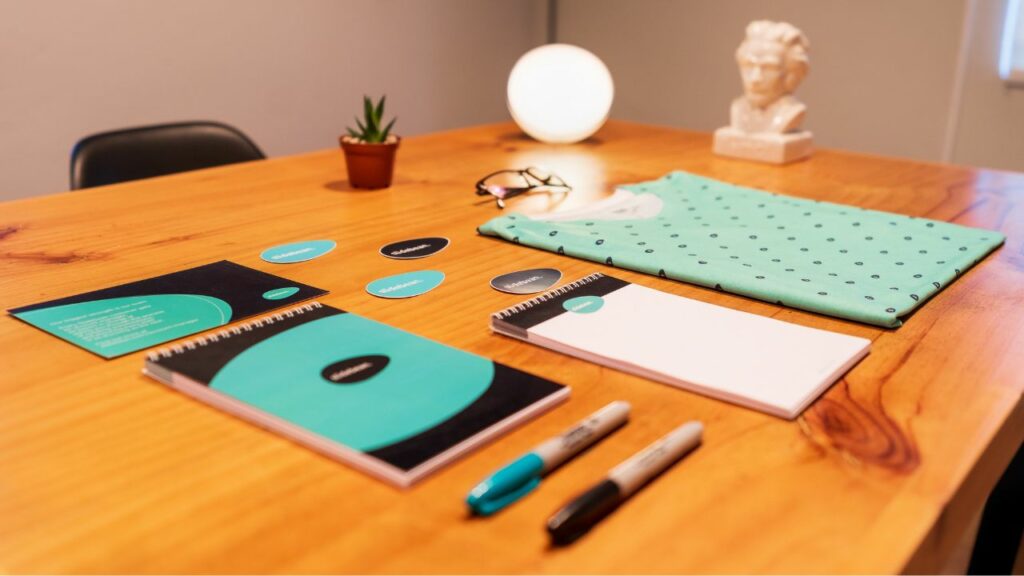
The way you design your creative space communicates as much about your brand personality as your logo or website. In today’s visually focused world, every detail—from your choice of furnishings to the materials featured in your space—serves as a powerful touchpoint, signalling your values and style to everyone who walks in. Thoughtful, creative touches enable you to weave your story into the environment, turning even the most practical spaces into immersive brand experiences.
Start with Story-Driven Aesthetics
Begin by identifying the narrative at the heart of your brand. Ask yourself what story you want customers to remember—whether it’s one of playfulness, refinement, minimalism, or rebellion. This clarity will help ensure your space feels intentional rather than generic.
Every design choice should echo your brand’s unique voice. If your brand stands for bold thinking, consider vivid colour palettes or unconventional art. If it values tradition, vintage objects and classic materials can convey authenticity.
A well-branded studio space is about more than good taste—it’s about making your mark in the business landscape through intentional, story-led design. Let your narrative steer the use of textures, props, and lighting to create an environment that feels genuinely yours.
By weaving your brand’s values into each element, your environment becomes an extension of your unique story. This approach not only sets you apart but helps your audience connect on a lasting, emotional level.
Design with Texture, Light, and Movement
Texture plays a vital role in how people experience your brand in physical spaces. Incorporating textiles, woods, or unexpected surfaces creates layers that visitors can see and touch, adding a sensory connection beyond your digital presence.
Consider how lighting choices influence the mood of your environment. Natural daylight, like in homes, can make commercial spaces feel open and authentic, thereby boosting customers’ spirits. Tailored lighting, such as spotlights or dimmers, can direct attention where needed most.
Movement catches the eye and keeps a space feeling dynamic. Installations like mobiles, rotating displays, or gently moving curtains can introduce life and energy, reflecting a forward-thinking attitude.
Whether it’s a custom neon sign or a tactile element like coloured glass pebbles arranged in your reception area, these details can reinforce the emotional tone of your brand. They help transform an ordinary setting into a memorable and immersive brand experience.
Aligning your textures, lighting, and movement with your brand’s personality helps ensure each visitor’s encounter is both engaging and consistent with your values.
Use Colour Psychology and Strategic Layout
The colours you choose for your brand shape how people perceive your business long before they read a word. Warm tones such as red and orange suggest energy or urgency, while blue and green convey calmness, trust, or growth. Selecting a colour palette that aligns with your values helps reinforce the personality you wish to project.
Different moods can be evoked by specific shades. If your brand champions innovation, a bold yellow or vibrant purple might fit. For reliability and professionalism, you may lean towards navy or charcoal. Using consistent colours across all your materials makes your visual identity recognisable.
Layout is equally influential, signalling your brand’s approach to interaction and hierarchy. An open layout with lots of white space can indicate transparency and accessibility. A more structured or grid-based arrangement suggests formality and order.
Grouping elements thoughtfully guides attention and strengthens your message. Placing important information at the top or centre shows what you value most. The balance between open areas and tightly grouped sections can create either a sense of creativity or a feeling of control.
Consider how both colour and space work together. When coordinated effectively, these design choices help customers intuitively understand your brand’s aims and ethos.
Integrate Branding Subtly but Effectively
You can incorporate your logo or tagline into your space through features such as custom artwork, discreet vinyl lettering, or well-placed signage. This approach brings your brand to life without overwhelming clients or visitors. Small touches on entry walls or reception desks maintain a professional yet personalised atmosphere.
Integrating your mission statement into design elements—like printed materials, accent walls, or murals—provides subtle reminders of your brand values. You might also select furniture, fabrics, and colour schemes that reflect your brand’s tone.
Consistency is key, both online and offline. Using the same fonts, colours, and visual icons throughout your signage, decor, and digital platforms fosters familiarity and trust in those engaging with your brand.
Every visual cue in your space, from colours to signage, contributes to brand awareness and helps reinforce the message clients or collaborators associate with you. Even modest additions, such as branded stationery or digital screens displaying core values, can align your physical environment with your broader identity.
By weaving your brand into your surroundings delicately and thoughtfully, you create an experience that feels unified and memorable, rather than forced or commercial. This balance lets your personality shine while maintaining professionalism.
Don’t Forget the Unexpected Touches
Injecting an element of surprise into your space can reinforce your brand’s personality more than you might expect. A quirky installation where least anticipated, or a scent diffuser that subtly reinforces your identity, will linger in people’s memories. Small surprises can quickly set your brand apart.
Consider branded coasters, cleverly placed in corners guests seldom visit, or incorporating interactive pieces that catch people off guard. These unexpected details do not need to be loud; their quiet presence often makes the greater impact.
A handwritten note tucked away, a unique piece of local art, or an object that invites a smile—all add richness to the visitor experience. When guests feel surprised and delighted, they are far more likely to remember your space and share their experience with others.
Photo-worthy moments are created when people encounter small spots of joy they did not expect. Simple yet thoughtful touches can transform your environment from ordinary to memorable, subtly capturing your brand’s true essence.
Conclusion
Your creative studio and branded environment are more than functional spaces—each detail is a strategic touchpoint that shapes perceptions and reflects your brand’s values. Treat your environment as a visible expression of your brand promise, reinforcing trust and consistency. Take this opportunity to reimagine your own space and approach it as a foundation for deeper engagement and lasting recognition.
In today’s competitive market, loyalty programs have become a quintessential part of business strategies aiming for growth. By rewarding repeat customers, you not only encourage further purchases but also build a base of brand advocates. A well-structured loyalty program can transform one-time shoppers into lifelong patrons. In utilising such programs, the opportunity for deepening customer relationships is immense, leading to an increase in overall customer lifetime value.
Your business stands to benefit greatly from the insights garnered through loyalty programs. These insights allow you to tailor offerings and communication to the preferences and behaviours of your customers. As you personalise these interactions, your customers feel valued and are more likely to remain engaged with your brand. Efficacious use of loyalty programs can result in a significant uptick in both customer retention and revenue, allowing you to make your mark in the business landscape.
Crafting the right loyalty program can be as simple as offering discounts on future purchases or as intricate as providing exclusive experiences. The key is to strike a balance that resonates with your target audience while remaining sustainable for your business model. When implemented astutely, these programs can catalyse business growth by fostering a loyal customer base that is invested in the long-term success of your brand.
Understanding Loyalty Programs
Loyalty programs are a strategic tool for businesses seeking to incentivise repeat purchases and deepen consumer relationships. Here, you’ll discover the main types of loyalty schemes, how technology enhances their effectiveness, and the pivotal role of data in offering tailored experiences to customers.
Types of Loyalty Programs
When you sign up for a loyalty program, you’re often met with various structures, each designed to match different consumer behaviours and business models. Points-based programs are a common approach where you accumulate points that can be exchanged for rewards or discounts. For your commitment, tiered programs elevate your status and benefits as you reach higher levels of spending or engagement.
The Role of Technology in Loyalty Programs
Technology has transformed loyalty programs from simple punch cards to sophisticated marketing tools. It allows for seamless integration of your shopping experience across multiple platforms, whether in-store or online. With mobile apps, you have easy access to your rewards, while businesses utilise technology to streamline operations and enhance your experience.
Data-Driven Insights and Personalisation
Your interactions with loyalty programs generate vast amounts of data, which clever businesses analyse to understand your preferences. Through this, they offer more personalised rewards, tailor marketing approaches to suit your interests, and anticipate future trends. This data-driven strategy ensures that loyalty schemes are not only appealing but also deeply relevant to your desires and behaviours.
Building Customer Relationships
Loyalty programs are about more than just points and discounts; they’re about fostering enduring connections with your customers through every step of their journey. By engaging deeply and providing personalised experiences, you can bolster the bond between your brand and its loyal followers.
Creating Emotional Connections
To establish a lasting bond with your customers, it’s pivotal to tap into their emotions. Your communication should resonate with your customers’ values and create a sense of belonging. For example, align your brand with a cause your customers care about, and show genuine commitment to it. This shared passion becomes the bedrock of trust and loyalty.
Personalised Experiences for Enhanced Engagement
Every element of your loyalty program should reflect your customer’s preferences and history with your brand. From personalised offers based on past purchases to recommended products that suit their taste, these tailored touches make them feel understood and valued. Moreover, segment your marketing to ensure that the right messages reach the right customers at the right times, enhancing their journey with you.
Surprise Rewards Delight Customers
Unexpected gestures can have a significant impact on customer happiness. Imagine receiving a free gift from the Parcel Concierge Ireland for being a loyal customer, or an exclusive invitation to an event just because you’ve been with a brand for a year. Surprises like these not only delight but also reinforce a customer’s decision to choose your brand repeatedly.
Maximising Customer Value
Engaging with loyalty programs can dramatically enhance your customer value proposition by focusing on long-term relationships. With a keen eye on both customer lifetime value and rewards, you can pave the way for sustained business growth.
Strategies to Increase Customer Lifetime Value
To amplify your customer lifetime value, it’s crucial to ascertain customer needs and preferences. This involves tailoring your services and products to match their expectations, ultimately fostering stronger brand loyalty. By enhancing the perceived value of your offerings, you encourage repeat purchases which, in turn, boost your overall revenue.
Achieving this requires a careful analysis of customer data to pinpoint trends and preferences. For instance, if data signals a high demand for a particular product feature, making it more prominent can entice further engagement. Personalised communication, such as thank-you emails or customised offers based on customers’ purchase histories, can make your clients feel valued and understood, thereby increasing their connection to your brand.
Implementing Effective Rewards Programmes
An effective rewards programme is essential in cementing customer loyalty and increasing the perceived customer value proposition. Your program should offer clear, attainable benefits that encourage customers to return frequently. Exclusive discounts, member-only sales, and points towards future purchases are potent incentives.
For example, if you run a cafe, you might offer a free beverage after a certain number of purchases. This type of immediate, tangible value can significantly impact purchase decisions. Moreover, integrating a tiered rewards system can create a sense of progression and accomplishment, compelling your customers to aim for higher tiers with better rewards.
The key is to keep your rewards programme simple but significant. A complex system might deter customers, while one that effortlessly blends with their shopping behaviour will likely be embraced. Regularly review and adjust your rewards to align with changing consumer trends and to maintain a competitive edge.
Growth Through Loyalty Strategies
Loyalty programmes can be a potent tool for your business growth by enhancing both customer acquisition and retention. These programmes not only reward your current customers but also serve as a basis for gaining new ones.
Acquisition and Retention Synergy
Your loyalty programme should aim to create a harmonious relationship between acquiring new customers and retaining existing ones. By incorporating rewards that increase in value over time, you encourage customers to stay longer and spend more. For instance, tiered loyalty systems, where customers achieve different levels based on their spending, effectively motivate continued purchases. This stratagem bolsters customer retention and augments sales, as the desire to reach higher tiers keeps customers engaged.
Additionally, offering initial sign-up bonuses can spur acquisition by giving new customers immediate value. Such incentives can range from discounts on their first purchase to complementary products or services. By implementing these tactics, the dual objectives of fostering a growing customer base and maintaining a loyal clientele are met, propelling your business’s expansion.
Leveraging Referrals and Partnerships
To amplify your customer base and fuel business growth, harness the power of referrals within your loyalty programme. Encourage your loyal customers to recommend your service or products to friends and family. Providing a benefit, like a discount or loyalty points for every successful referral, can turn your customers into brand advocates.
Strategic partnerships can also enhance your loyalty programme’s appeal. Partner with businesses that complement your products or services. For example, if you run a bookshop, consider teaming with local coffee shops to offer exclusive discounts. This not only broadens the horizons of what your loyalty programme can offer but also introduces your brand to your partners’ customers, driving up potential sales and acquisition. Integrating strategic partnerships with other companies presents a win-win situation and helps to catapult your customer retention while expanding your reach.
Innovative Approaches to Loyalty
Leveraging innovative loyalty strategies is crucial for staying ahead in competitive markets. You’ll find that blending the excitement of gamification with the efficiency of SaaS can significantly enhance your customer engagement.
Gamification and Loyalty
You can turn your loyalty program into a fun and engaging experience through gamification. Introduce elements like points, levels, and challenges to encourage repeated interaction with your brand. Picture your customers earning points not just for purchases, but for social shares, reviews, or referrals. This approach is powerful; it taps into the innate human love for games while reinforcing positive consumer behaviours.
A leaderboard, for example, can create a friendly competition among your customers, driving them to engage more frequently with your services. Additionally, offering badges or achievements for certain milestones can provide a tangible sense of accomplishment, which can be tied to specific rewards or privileges.
Exploring SaaS for Next-Generation Loyalty Programmes
Next-generation loyalty programmes are increasingly facilitated by SaaS companies, which offer digital tools to track and analyse customer behaviour. These platforms allow you to personalise rewards and seamlessly integrate with your overall customer experience.
Your SaaS-based loyalty program can flexibly adapt to real-time data, meaning you can tailor offers to match individual customer needs or respond swiftly to changing market dynamics. For instance, if data suggests that your customers prefer mobile interactions, you could design an app-based reward system, enhancing digital engagement. In contrast, if they value sustainability, your program could boost rewards for eco-friendly purchases or behaviours.
This integration of innovation and consumer-centric strategies can result in a robust, dynamic loyalty programme that keeps your business at the forefront of your industry.
Conclusion
Incorporating a loyalty program into your business strategy can catalyse sustainable growth by rewarding customers, building positive brand associations, and boosting retention.
Its success relies on connecting with customer needs and preferences through relevant, personalised gestures and seamless experiences. Communication is key; regularly inform and engage members. The data gathered is invaluable for tailoring offerings and enabling a competitive edge.
Continuously measure effectiveness using metrics to ensure the program contributes to business growth. While building a successful program is an ongoing journey, the right strategy and execution can turn patrons into ardent supporters – a mutually beneficial outcome for you and your customers.
Breaking into the Irish business landscape requires a solid understanding of its unique market dynamics and cultural nuances. Ireland’s reputation as a welcoming hub for entrepreneurs makes it an attractive destination for your business endeavours. The local economy is known for its resilience and innovation, making it fertile ground for startups and established companies looking to expand their footprint.
You’ll find that despite its size, Ireland offers vast opportunities across various sectors such as technology, pharmaceuticals, and agri-business. Its business-friendly environment, underscored by favourable tax policies and government support for innovation, creates a platform where your business can thrive. Connecting with local networks and understanding the Irish consumer will be instrumental in tailoring your offerings to suit market needs.
Remember, while the potential for success is immense, careful planning and strategic market entry are crucial. Familiarising yourself with the regulatory framework and establishing robust local partnerships can help navigate the Irish business landscape successfully. By combining your ambition with a thoughtful approach, you can make a significant impact and ensure your business’s growth and longevity in Ireland.
Navigating Irish Business Regulations
Ireland offers a dynamic environment for businesses with its supportive tax system and regulatory landscape. Navigating these regulations is key to your company’s success.
Understanding VAT and Corporation Tax
Your journey into the Irish market will involve familiarising yourself with VAT (Value Added Tax) and Corporation Tax. Ireland’s standard VAT rate is 23%, but reduced rates apply to certain goods and services. If your annual turnover exceeds or is likely to exceed €75,000 for the supply of goods or €37,500 for the supply of services, registering for VAT becomes mandatory.
Corporation Tax in Ireland is notable for its attractive rate of 12.5% for trading income and 25% for non-trading income. As a business owner, you need to understand your tax obligations to benefit from possible tax credits and incentives. For example, the Research and Development Tax Credit allows for a 25% tax credit for qualifying R&D expenditures.
Compliance with Employment Law and Company Registration
When it comes to employment law, staying compliant ensures a smooth operation. It’s your responsibility to adhere to the regulations concerning employee contracts, minimum wage, working hours, and statutory leave entitlements, among others. The Irish legal framework aims to protect both employers and employees, thereby fostering a positive business environment.
Registering your business is another crucial step you’ll need to take. The Companies Registration Office (CRO) is the central repository of public statutory information on Irish companies and business names. Whether you’re operating as a sole trader or establishing a limited company, you must register with the CRO. The decision on your business structure will have implications not only for how you operate but also in terms of liability and tax regulations.
Understanding these critical elements will help you ensure that your business thrives within the Irish regulatory framework.
Exploring Business Growth and Funding Opportunities
To navigate the Irish business landscape effectively, you’ll need to understand the various growth and funding avenues available, ensuring the solid groundwork for your business expansion. Implementing effective strategies for success in these areas is key.
Grant Schemes and Investment Landscape
Enterprise Ireland stands as a pivotal entity in supporting businesses through grants and funding opportunities. It is crucial to familiarise yourself with their offerings, which include feasibility grants, innovation vouchers, and R&D funding. For startups, the investment landscape is vibrant, with angel investors and venture capitalists actively searching for promising ventures. Market trends and consumer preferences are key factors that influence the decision-making process for these investors.
Networking and Building Partnerships
Building a sturdy network is vital to thriving in the Irish market. Networking events abound, offering you the chance to connect with potential business partners and advisors familiar with the startup ecosystem. To forge effective partnerships, target incubators and industry events that align with your business niche, ensuring you stay abreast with the current competition and market opportunities.
Providing VIP Experiences
Offering exceptional experiences can differentiate your business and create lasting impressions. For instance, by partnering with Irish Chauffeurs Dublin, your esteemed clients can enjoy luxurious travel services, elevating their overall experience with your brand. This focus on high-quality interactions can be a significant touchpoint to set your business apart in a competitive landscape.
Building a Strong Digital Presence
In today’s digital economy, it’s crucial for Irish businesses to establish a robust online presence. This involves not just a functioning website but also leveraging the appropriate digital channels to connect with your audience. Here’s how you can enhance your digital footprint in the Irish market.
Leveraging Social Media and SEO
To make your mark, you must utilise social media and search engine optimisation (SEO) to increase your visibility. A strong social media presence allows you to engage directly with your customers on platforms like Facebook, Twitter, and Instagram. Consistent and strategically planned content can amplify your brand’s voice and reach. Understanding the impact of branding in business design for these platforms is key.
Pair this with robust SEO strategies, incorporating key phrases relevant to your business to improve your search engine rankings. This process involves both on-page and off-page techniques such as keyword research, content creation, and link building.
Your Actionable Steps:
Develop a content calendar for your social media channels.
Conduct thorough keyword research tailored to your target market.
Optimise your website’s content and structure for better search engine visibility.
Effective Web Design and User Experience
Your website is often the first point of contact with your customers, so it’s crucial to make a lasting impression with effective web design. Prioritise user experience (UX) by ensuring that your site is navigable, accessible, and aesthetically pleasing. This means mobile-responsive designs, fast load times, and intuitive user interfaces. Remember that great web design is not only about looks; it’s about how easily your customers can find the information they need and complete their desired actions.
Your Actionable Steps:
Evaluate your website’s mobile responsiveness.
Test loading times and optimise as needed for speed.
Arrange for user testing to gather feedback on your website’s usability.
Data-Driven Marketing Strategies
Staying ahead in the Irish digital marketing landscape requires harnessing the power of data. By employing data-driven marketing strategies, you can make informed decisions that align with market research and consumer behaviour analytics. Track your website’s performance using tools like Google Analytics and adjust your strategies based on what the data is telling you. A digital marketing agency can help you interpret this data and apply it to target your advertising effectively, refine your content marketing, and optimise every facet of your online presence.
Your Actionable Steps:
Set up Google Analytics to track your website’s performance.
Analyse key performance indicators (KPIs) regularly to identify trends.
Collaborate with a digital marketing agency to turn data insights into action.
Innovating with Irish Economic Sectors
Your understanding of the Irish business landscape is not complete without a keen insight into its booming economic sectors. Ireland’s commitment to innovation and sustainability will undoubtedly shape your experiences in tech, pharmaceuticals, financial services, and renewable energy.
Advancements in Tech and Pharmaceuticals
Ireland’s tech sector is thriving with Dublin and Cork quickly becoming hotbeds of innovation and technological breakthroughs. Your involvement in the tech scene benefits from the country’s substantial investment in research and development. Companies in the pharmaceuticals space, a cornerstone of the Irish economy, also stand at the forefront of innovation. In light of global health challenges, your participation in these sectors can leverage Ireland’s educated workforce and low corporate tax rate to drive economic and medical advancements.
Financial Services and Renewable Energy
Your expertise in financial services can flourish with Ireland’s stable, dynamic economy, supported by robust regulatory frameworks and a favourable corporate tax environment. Your focus on sustainability aligns with the wave of innovation in renewable energy, gearing towards a greener economy. By prioritising these areas, you’re part of harnessing Ireland’s natural assets, such as wind power, and contributing to a sustainable future, fostering economic resilience and international leadership.
Adapting to Market Dynamics and Consumer Trends
To stay competitive in the Irish market, it’s crucial for your business to harness the power of data analytics and artificial intelligence while also engaging with the cultural context and preferences of your customers.
Leveraging Data Analytics and Artificial Intelligence
In recent years, data analytics has become an indispensable tool for understanding consumer preferences and steering strategies. By collecting and examining extensive datasets, your Irish business can uncover trends that will inform product development and marketing initiatives. Analytics software can help you identify patterns in customer behaviour, enabling you to tweak your offerings to better align with what your patrons desire.
Artificial intelligence (AI) takes insights to the next level by predicting future consumer trends and automating decision-making processes. For instance, AI can optimise your pricing strategy by evaluating past market research and sales data, thus potentially boosting your revenues. It’s all about being proactive rather than reactive; you’re anticipating changes and staying ahead of the curve.
Understanding Cultural Nuances and Customer Engagement
Ireland’s unique cultural landscape plays a significant role in shaping consumer behaviour. Tapping into such cultural nuances can greatly enhance your customer engagement strategies. For your marketing efforts to resonate, they should reflect the values and traditions pertinent to your Irish audience. Social data can be particularly insightful here, revealing what drives the dialogues within communities and helping you refine your message.
Creating a customer experience that feels personalised and culturally relevant is also vital. A business name or campaign that connects with local sentiments can foster loyalty and generate word-of-mouth marketing. Ensuring that every interaction—whether via social media, in-store, or through customer service—is thoughtful and sensitive to Irish cultural contexts will help cement your brand as a favoured choice among consumers.
By actively engaging with these strategies, you will place your business name at the forefront of consumers’ minds and adapt to market dynamics in a way that could grow your business within the Irish market.
Building a successful brand is a crucial aspect of growing a business in today’s competitive marketplace. As companies vie for their target audience’s attention, a well-defined and recognisable brand is a powerful tool that can set them apart from the competition. The process of brand building involves identifying the target audience, understanding the market landscape and establishing a unique presence that resonates with potential customers.
To start the brand-building journey, it is important to conduct extensive research on the target audience and competitors in the market. This initial groundwork allows businesses to gain insight into the current market trends, audience preferences, and the strategies employed by successful players in the industry. With this valuable information, businesses can craft a clear brand position that aligns with their target consumers’ expectations and differentiates them from their competitors.
Another critical aspect of brand building is creating a visually appealing and cohesive brand identity. From logo design to the overall look and feel, a strong visual presence allows businesses to establish a lasting impression in the minds of potential customers. Additionally, crafting an engaging brand story and connecting with customers emotionally can create a loyal brand following as people respond favourably to authentic and relatable messages. Overall, a well-built brand is key to fostering customer loyalty, driving long-term growth and ensuring a strong market presence.
Understanding Branding
Building a brand involves understanding the concept of branding itself. Branding refers to the overarching idea or image of a company that is associated with its products or services. It encompasses the company’s name, designs, logo, and other features that are unique to its personality, collectively presenting a cohesive identity to its target audience.
Creating a strong brand is vital for businesses to distinguish themselves from competitors and establish a solid presence in their market. This starts with defining the brand’s purpose and position, which serve as the foundation for all subsequent branding efforts. By knowing what the company stands for and what it aims to achieve, businesses can develop a relevant and consistent brand identity.
When creating a brand, it is crucial to identify the target audience and understand their needs, preferences, and expectations. This ensures the company can tailor its messaging and visual identity to resonate with these potential customers. Moreover, researching competitors provides insights into best practices, gaps, and opportunities in the market, highlighting ways the brand can differentiate itself.
Branding also involves crafting a brand story, encompassing the company’s history, values, and goals. This narrative should be emotionally engaging, reflecting the essence of the brand and its unique selling points. By constructing a strong narrative, businesses can foster customer loyalty and invest their audiences in the company’s journey.
Another essential aspect of branding is the design process, which includes creating a memorable logo and selecting appropriate colours and typography for the brand. Visual identity is often the first point of connection between a company and its potential customers, playing a significant role in forming their perceptions. For instance, custom signs can help reinforce the brand’s image, like those expertly crafted by Vinehall Signage.
Overall, understanding branding is crucial for businesses looking to establish a strong identity, connect with their target audience, and differentiate themselves from competitors. A well-executed brand has the power to foster recognition, trust, and ultimately, revenue for a company, making it an essential component of success in today’s competitive landscape.
Identifying Target Market
Understanding the target market is crucial for building a successful brand. A clear grasp of the target market helps businesses to shape their marketing strategies, messaging, and products to appeal to potential customers. The process of identifying the target market involves analysing demographics, geographics, psychographics, behaviours, and buyer personas.
Firstly, it is essential to research and gather data on demographics. Demographics refer to the age, gender, income, education level, and other vital statistics of potential consumers. The information can be collected through surveys, social media analytics, or customer databases. By doing so, businesses can tailor their marketing messages to appeal directly to the targeted audience.
Next, geographics play a significant role in determining a brand’s target market. The location, region, and even climate can influence the preferences and behaviours of the consumers. By examining these factors, businesses can identify the regions where their product or service will have the highest demand and create marketing campaigns that cater to the local needs and preferences.
Psychographics is another essential aspect of identifying the target market. This includes understanding people’s values, attitudes, interests, and lifestyles. These factors can greatly influence a customer’s decision-making process. Researching psychographics can help businesses develop appropriate brand messages that resonate with their target audience. One strategy to gather psychographic data is using social media listening tools to analyse customer conversations and feedback online.
Buyer personas are another crucial aspect of understanding the target market. A buyer persona is a fictional representation of an ideal customer based on demographics, psychographics, and behaviour patterns of real customers. Creating detailed buyer personas can help businesses to effectively target their marketing efforts, tailor their messages, and develop products or services that best cater to their customers’ needs.
In conclusion, identifying and understanding the target market is a fundamental step in building a successful brand. Businesses need to gather and analyse data related to demographics, geographics, psychographics, and behaviours. By crafting detailed buyer personas, they can create tailored marketing strategies that effectively resonate with their target audience, which, in turn, leads to a more powerful and sustainable brand.
Creating a Brand Identity
A solid brand identity is crucial for businesses to establish a unique presence in the market and create a lasting impression on their audience. Building a strong brand identity involves several key elements, including a logo, colours, fonts, typography, and brand story.
A captivating logo serves as the visual representation of a company and is often the first impression customers have of the business. It’s essential to design a logo that reflects the essence of the company, is memorable, and stands out in a crowded market. A well-crafted logo can communicate the brand’s values, personality, and purpose, making it easier for customers to connect with the company.
Colours play a significant role in shaping a brand’s identity, as they evoke emotions and associations that help define the brand’s personality. Colour choice is an essential aspect of the design process, as each colour carries psychological connotations that can influence consumer perceptions. By selecting a consistent colour palette, a business can reinforce its identity and imprint its visual signature in the minds of customers.
Fonts and typography also impact how customers perceive a brand. The typeface chosen should be easily readable and resonate with the brand’s personality, mission, and target audience. Different fonts can evoke diverse feelings and impressions, so it’s crucial to choose a typeface that reflects the brand’s core values and image.
The brand story is another integral part of establishing a strong brand identity. It outlines the company’s history, mission, and vision, and serves as the foundation for building an emotional connection with the target audience. When shared effectively, a compelling brand story can foster customer loyalty and reinforce the brand’s identity.
In summary, a well-thought-out and consistent brand identity is essential for businesses aiming to create a strong presence in the market. This can be achieved by carefully selecting a logo, colours, fonts, typography, and crafting a compelling brand story to resonate with their audience. By doing so, businesses can establish themselves as confident, knowledgeable, and clear in their communication, ultimately fostering long-lasting connections with customers.
Formulating a Brand Strategy
Formulating a brand strategy is an essential aspect of building a brand that lasts and connects with its audience. A well-thought-out strategy provides direction, consistency, and a foundation for decision-making across various aspects of a business. The process typically involves focusing on the brand’s values, unique value proposition, mission statement, and brand positioning statement.
The brand values play a crucial role in shaping the brand’s direction and determining how the brand interacts with its customers. These values should reflect the beliefs and principles that guide the brand’s actions, ensuring a strong connection between the brand and its target audience. Establishing clear values also helps maintain consistency in messaging and actions, fostering trust among the customers.
A unique value proposition (UVP) communicates the brand’s distinguishing qualities and indicates why customers should choose the brand over its competitors. This aspect of a brand strategy involves researching the market landscape, understanding the target audience’s needs, and highlighting the key features or benefits of the brand that address those needs. The UVP should be distinct, relevant, and easily understood by the audience.
The mission statement serves as a guiding force behind the brand’s goals and objectives, asserting its purpose and vision. A clear and concise mission statement helps a brand stay focused on its core intentions and ensures internal alignment among team members. It should be easy to communicate and resonate with both employees and customers.
Finally, preparing a brand positioning statement entails defining the brand’s unique place in the market, taking into account its target audience, industry, and competition. This process involves identifying the brand’s competitive advantage and establishing an emotional connection with the audience. A strong brand positioning statement differentiates the brand from its competitors and inspires customers to engage with and advocate for the brand.
By carefully addressing these key elements, a business can formulate an effective brand strategy that fosters long-lasting relationships with customers and helps achieve the brand’s objectives. This foundation will guide future marketing endeavours, create consistency and foster growth for the brand in the long run.
Translating Strategy to Voice
A key aspect in building a brand is translating its strategy into a distinct and consistent voice. This involves incorporating target audience, brand personality and tone to create a unique identity that sets the brand apart from its competitors.
The process of developing a brand voice starts with understanding the target market. Identify your ideal customer and tailor your messaging to resonate with this specific audience. Thorough research on their preferences, needs and behaviours will help in crafting a voice that appeals to them.
Next, consider the brand’s personality and archetype. Align your brand’s voice with its core values and characteristics. For instance, a luxury brand might adopt a sophisticated tone, while an eco-friendly brand may use a more relaxed and informative tone. This way, the brand voice remains consistent with the brand identity and helps create a lasting impression.
The tone of voice for a brand is crucial in conveying its message and maintaining consistency across different platforms. It is important to strike a balance between being approachable and professional, depending on the target audience and the brand style. The tone should be uniform across all marketing materials, including websites, social media, and advertising campaigns.
A memorable slogan can further amplify the brand voice. This concise yet powerful tagline should encapsulate the essence of the brand and its purpose. It also serves as an opportunity to summarise the brand’s unique offerings and values in a catchy and memorable manner.
In conclusion, translating strategy to voice involves understanding the target audience, aligning voice with the brand personality, maintaining a consistent tone across platforms, and developing a slogan that encapsulates the brand’s essence. By incorporating these elements, a brand can effectively communicate its message and appeal to its desired audience, leaving a lasting impression and building a strong brand identity.
Building an Online Presence
Developing a strong online presence is essential for any brand looking to establish itself in the digital age. With the right approach, a brand can effectively expand its audience, strengthen its image, and build lasting connections with potential customers. Here are a few key components to consider when creating a solid online presence.
Website design plays a vital role in how customers perceive your brand. An aesthetically pleasing and professionally-designed website can quickly engage visitors and convey professionalism. By working with a professional bew design company, you can ensure that your site is easy to navigate, mobile-responsive, and highlights the value that your brand provides. Regular updates and improvements to your website can help maintain its relevance and increase its visibility.
Social media marketing can boost brand awareness by connecting with a vast and diverse audience. Select the social media platforms that best align with your target demographic and plan a consistent posting schedule. Engaging with users by responding to comments and messages can help humanise your brand, while sharing valuable and relatable content encourages interaction.
Content marketing can act as a powerful driver in establishing your brand’s authority within your industry. Producing informative and problem-solving content, such as blog posts, whitepapers, and high-qualify videos, helps your audience understand your brand’s value proposition. Regularly publishing high-quality content, in turn, fosters trust and attracts potential customers to your website.
Search engine optimisation (SEO) is a critical aspect of building your brand’s online presence. Optimising website content with relevant keywords, meta-descriptions, and clear formatting can significantly increase your site’s visibility on search engine result pages. While working on on-page SEO, incorporating off-page SEO efforts, such as building high-quality backlinks and engaging in link-building strategies, can further enhance brand credibility and lead generation.
In summary, a comprehensive approach that integrates website design, social media marketing, content marketing, and SEO can assist in building a solid online presence for your brand. Prioritising these elements and adapting to the ever-changing digital landscape will set your brand on a path to long-term success.
Sustaining Your Brand
Achieving success in brand building is just the beginning of the journey. The real challenge lies in maintaining and growing the brand over time. This process requires clarity, consistency, and a strong commitment to cultivating trust among customers. Here are some essential steps to follow when aiming to create a sustainable brand.
Ensure consistency across all touchpoints: Consistency is the backbone of brand sustainability. It helps consumers recognise and remember a brand, reinforcing its unique attributes and creating a sense of familiarity. To maintain consistency, businesses should synchronise their messaging, tone of voice, visual identity, and customer experience across all platforms, including websites, social media, and physical materials such as packaging and promotional items.
Foster trust and credibility: Trust is a vital aspect of a brand’s sustainability, as it directly influences customers’ loyalty and willingness to make repeat purchases. To establish trust, businesses should prioritise transparent communication, maintain high-quality products and services, and consistently deliver on their promises. Addressing customer concerns and being open to feedback are also essential in nurturing trust and credibility.
Monitor and manage reputation: A brand’s reputation has a significant impact on its sustainability. In an era where social media plays a prominent role in influencing consumer perceptions, it’s crucial to actively monitor and manage your brand’s reputation. Brands should listen to their customers, analyse feedback, respond appropriately to negative reviews, and harness positive feedback to enhance their public image.
Adapt and evolve: Sustainable brands demonstrate a willingness to adapt and evolve in response to changing market conditions or customer preferences. By staying informed about industry trends and continuously evaluating their strategies, companies can identify areas of improvement and growth opportunities. This proactive approach ensures businesses remain relevant and competitive in the long run.
In conclusion, establishing a sustainable brand requires a meticulous strategy that focuses on consistency, trust, and reputation management. By embracing these principles, businesses can create a resilient and lasting brand that resonates with customers, fostering ongoing success and growth.
Video production companies are great for getting high-quality videos without compromising your budget or schedule. A video production company is a professional team that can help you create video content for your business. They have all the necessary equipment and experience behind the camera and in front of it, which means they can offer more than just one person with a camera.
Focus on your business
Like most small business owners, you have a full plate. Your day-to-day tasks include marketing your business, providing excellent customer service and keeping up with the latest trends. You don’t want to add video production to that list. A video production company can focus on what they do best while taking the burden of creating a video off your shoulders. That leaves more time to do what matters most—running your business!
Creative expertise
Creative expertise is an important factor in making a great video. Creative expertise is essential, whether it’s coming up with a great script, idea, storyboard or filming plan. A video production company has the experience and knowledge to pull off any concept you can imagine.
Professionalism
Professionalism is an important factor when choosing a video production company like Hedgehogs vs Foxes. A professional-looking video is essential for providing the best possible first impression for your business, and it also offers you the opportunity to create a lasting relationship with your audience.
One of the main ways companies can distinguish themselves from one another is by creating quality content that makes them stand out from their competitors. One common strategy that many businesses use in this regard is hiring an experienced team at their disposal so they can have access to all sorts of services, such as filming or editing videos, creating websites and more. Here are some reasons why it’s worth investing in such services:
A professional company will always be able to work within your budget so you don’t have spend too much money on these projects (but still get great results).
Access to the right equipment
You want the best possible footage, right? And you don’t want to risk missing out on that perfect shot because your camera was too bulky or didn’t have the right lens.
A video production company will ensure they have access to the right equipment for each job to capture everything perfectly. They know how to use it, how to work with it and how best to get the most out of it.
And suppose you are working on a budget or would like recommendations about what cameras or lighting gear may suit your needs better than others. In that case, a professional video production company can help there too!
Experience behind the camera and in front of it
You might think that being a producer is about as far from the camera as possible. But it’s much more helpful to be both a producer and an actor.
If you’re working with actors who are new at their craft and may need some extra coaching, having experience acting yourself can make all the difference. A good producer will know how to work with actors and understand what it feels like to be on set. Empathizing with everyone involved in the project makes your job easier and helps everyone perform better!
Not only should you have experience in front of the camera (or behind or even both), but if possible, try getting involved with other roles such as writing or editing. These skills will help round out your skill set for future projects and allow for more flexibility when things change on set (which they always do).
Technical knowledge
You don’t need to be an expert in video production or have experience making videos. However, you do need to be prepared for the technical aspects of creating a video. A good production company will guide you through this process and help you get the most out of your budget and time. What if you spend too much money on equipment that doesn’t work? What if your footage is unusable because of poor lighting or sound? What if you waste hours in post-production trying to fix problems that could have been avoided by choosing the right team from the start?
A professional team will know how to use their equipment and access many other products and services, such as camera rentals, studio space rentals, lighting equipment rentals and more (depending on their needs). They will also understand how these elements work together and why some work better than others. Finally, they’ll be able to advise on best practices so that filming goes smoothly from start to finish!
Peace of mind
When you choose a video production company to partner with, you can rest assured that they will take care of all the nitty-gritty details for you.
You don’t have to worry about finding a location and negotiating for its use. Instead, you can focus on your business and ensure everything runs smoothly. You also won’t have to worry about the quality of the content because your trusted video production company will take care of everything from start to finish: editing, filming, and graphical elements—they will do it all at an affordable price point. And since they work closely with their clients throughout every step of production (from conception through post-production), they know how best to serve them based on their needs and budget constraints while delivering high-quality results consistently over time.
Everything under one roof
Suppose you don’t use a video production company. In that case, you’ll probably find yourself dealing with multiple vendors: one for the scriptwriter, another for the actors and actresses, another for the director or cinematographer—and that’s just the beginning. It can all be overwhelming when you’re new to this type of project. And let’s face it: even if you’ve done it before, there are still plenty of opportunities to make mistakes and overlook something important.
A fresh perspective
When you work with a video production company, you’re getting more than just their expertise. You’re also getting their perspective on creating the best possible video for your audience. Here are some reasons why it’s so important to have input from a video production company:
They’ve seen it all before. A seasoned videographer can offer invaluable insight into what works and doesn’t work when it comes to videos—and they’ll be able to help you avoid any costly mistakes along the way.
They’ll think outside the box. Your idea may be great on paper, but if there’s no way for viewers to relate or identify with it in practice (or if they simply won’t care), then what were those few hours spent writing?
They can get straight to the heart of your message instead of drowning out its meaning through unnecessary bells and whistles that might seem cool at first but ultimately end up detracting from your brand’s message over time.
Branding experts
You shouldn’t be afraid to delegate your video production needs to a professional. Video production companies are experts in branding and know how to create a cohesive brand image across all your video marketing activities. They can help you develop a brand identity that is consistent and recognizable, from the colour palette of your logo to the tone of voice used in your advertisements. And their expertise doesn’t end there: video production companies also have experience creating compelling content for social media channels, which allows them to create videos that drive engagement and encourage viewers to share them with their networks.
Dedicated professionals who care about producing quality content for you
When you work with a video production company, the professionals are dedicated to your project and will provide you with the best quality work. They’ll be courteous and professional in their manner, ensuring you’re happy with the final product. And if they go above and beyond what’s expected, they may even get more loyal customers as a result!
They can make your budget go further with bulk purchasing power and efficiency regarding time management
As a company, you have to manage your budget. It’s no secret that video production is expensive, but if you hire a seasoned video production company like us, you can get the best quality for your money. Here are some of the ways they can help:
They have bulk purchasing power – This means they buy large quantities of equipment and resources at discounted prices, allowing us to pass those savings on to our clients.
they understand time management – As a client, when you work with us on your next project, they will make sure there are no delays caused by miscommunication or poor planning.
they know how to save both our clients and ourselves time while producing high-quality work
Continuity across all your branding and marketing activities, including copywriting, web development and graphic design
Having a consistent visual and verbal identity across all your branding and marketing activities is important. Your brand is more than just a logo. It’s the total of your impressions on people as they encounter your company in any medium—print, online or even in person. A video production company can help with all aspects of branding, including copywriting, web development and graphic design. Your video production company should understand the importance of having a cohesive brand strategy across all media.
Alignment with your brand values and voice
The first thing you need to do is determine your brand values. What makes your company different from the competition, and how can you communicate that? Is it customer service, quality, or price? Once you know what sets you apart from competitors, it’s time to ensure that every communication with your audience reflects those values.
Using a video production company allows them to create videos that consistently represent you. You can use the same voice in all your videos, so they aren’t constantly having someone new coming in and out of their world with each new message they receive from your company!
Develop a long-term relationship that leads to even better videos in the future!
A video production company can build a long-term relationship with your brand and business. The more time they spend working on videos for you, the better they will get to know your brand, its goals and how best to communicate them. They will also be able to make better use of their expertise to produce something that works for you. And when it comes down to it, video marketing should be all about: improving over time so that the next video is even more effective than the last one at reaching your customers!
Video production companies are an excellent choice for getting high-quality videos without compromising on your budget or schedule
Video production companies are great for getting high-quality videos without compromising your budget or schedule. Because they have experienced, professional staff and state-of-the-art equipment, they can help you get the most out of your video project. Plus, they can help you focus on your business instead of the technical side of video production.
Conclusion
If you’re still not convinced, just remember that a video production company can help you with every aspect of your production: from developing scripts to casting actors, from directing the shoot to editing footage into a finished product. You might be surprised by how much time and money can be saved in the long run when a company does everything for you!
It’s not always easy to pick the correct kind of outdoor advertising display. Fortunately, we’ve put together this useful guide to assist you in your quest for the ideal display.
Learn more about the many outdoor displays on the market, as well as how to design, care for, and select the best weather-resistant display by reading on.
It is possible to bring attention to your business, event, or charity in any outside area by using outdoor advertising displays.
Custom printed PVC banners and flags, pop-up tents, and pavement signage are just a few examples.
When purchasing outdoor displays, it is important to keep the elements in mind so that your displays can stand up to the test.
How can I know which outdoor display is best for me?
Where and how often you want to use your outside advertising display will determine the sort of outdoor advertising display you require; examples of popular locations and items that may be utilized in these settings are provided below.
Outside your shop or on the forecourt, the following solutions are guaranteed to catch passersby’s eye who seek the newest deals and discounts.
Signs on the Road
It’s common for them to be located just outside stores, where they may feature the most recent bargains and visuals that can be updated often at low expense. Pavement signs are popular for many store owners because of their easy-to-use snap rail systems or magnetic poster pockets.
Chalk Boards
It is similar to pavement signs, however, chalkboards may be scribbled on using chalk or liquid chalk pens to allow for more creative patterns and pictures. Fast-changing messaging like “latest deals,” “opening times,” or “special of the day” is great for companies like restaurants and cafés to advertise with them. Using chalkboards allows you to change these messages at no additional expense. All you need is a little imagination and clean handwriting to pull this off!
Frames for ad posters
If you have a vast space to advertise, such as a grassy knoll or a garage forecourt, a larger Banner A-frame might be more appropriate. Again, you have complete control over how often you alter the banner image to meet your specific requirements.
Flags for Publicity
Forecourt areas are increasingly utilizing flags. They’re ideal for catching notice from a distance when utilized to display your company’s branding. Weighted and water-filled hard ground bases are only two of the many types available.
Printing on PVC
Use a PVC banner if you have access to adjacent railings, a wall, or another surface where banners may be attached with permission. PVC banners can be customized to meet your specific size needs. To promote a special event or advertise a product, PVC banners are an excellent choice.
Barricades at a cafe
Coffee shop spaces outside can use them to divide apart outside dining areas with a branded message that can be seen from a distance. PVC is the normal medium for printing, although mesh can be provided upon request.
Notices on outdoor billboards
External noticeboards are designed for outside usage and are weather-resistant. On the outside walls of stores, restaurants, and taverns, you’ll find these. Your company’s logo may be imprinted on the header panel of the majority of units. This is in addition to the fact that messages may be readily and often updated. Even in the dark, LED-lit menu boxes may be used to show menus and other promotional materials.
Showcases for outdoor events and exhibitions
In the case of an outdoor exhibition or event, you’ll have a designated area for your stand. Here are a few alternatives for a comprehensive event stand package depending on the available space:
Tent in a bag for easy transport
Pop up tents with your company logo on them are a great way to be prepared for any weather condition. There are a variety of ways to personalize your tent, from a personalized canopy to printed sidewalls.
Awnings for outside
Outdoor banner stands are distinct from pop-up banners that are often used indoors. Specifically built for outdoor use, these chairs have heavier bases or longer feet to help keep them steady on the ground.
Although it may be tempting to use indoor banners outside, they are not made to withstand all types of weather. An interior banner can be blown over by even a slight breeze, resulting in irreversible damage. If necessary, these outdoor banners may be utilized indoors as well.
Flags
The use of flags to bring attention to your outside exhibit stand or location is highly recommended. From a distance, their height, which can vary from two to five meters, draws attention. Feather flags are the most common shape, but there are a variety of bases to choose from, including soft- or hard-surfaced alternatives.
A counter for use outside
Great for displaying and handing out your samples, as well as serving as the focal point of your exhibit. Portable, sturdy, and completely branded, outdoor counters are ideal for events. Ideal for outdoor use. Even though these countertops are meant for outdoor usage, they may be utilized indoors if necessary.
Attractions in the form of inflatables
It takes minutes to set up a massive, eye-catching inflatable display. They’re also easy to carry to other locations because they’re lightweight when packed down.
Charitable awareness
When it comes to raising awareness for charitable causes, flags are the key. Because they are lightweight and portable, they are an excellent way to ensure that you are clearly seen from a distance.
Flags for the City’s Streets
With an attached flag, these handy bags may be noticed when moving through congested areas like marathons and other events.
Designing for outdoor use: some tips and tricks
When it comes to outdoor advertising, there is a lot of room for error. In order to save money on fresh artwork, there is a tendency to just replicate the same designs you would use on your existing indoor banners This might have a negative influence on your presentation.
Outdoor competitions pit you against not just your rivals but also the often complex and colorful scenery that surrounds you.
Using light blue (or, let’s face it, grey) for tall displays like flags might result in your message being obscured by the color of the sky. In order to maintain your branding consistent, it is necessary to ensure that the brand stands out. There is no doubt that reds and dark colors are always a good idea, whereas natural greens and browns are always bad. There is nothing better than a vivid color! With flags, logo-only artwork is becoming increasingly popular.
Color, message, text, and size all play a role in the design process. There must be a “attraction,” “convincer,” and “call to action” on huge displays or those aimed at fast-moving traffic. Offers that include a deadline, a phone number, or a web address are examples of this type. Text that is too tiny or too much to take in at a glance may prevent people from reading all of the information on the screen.
If you plan to display photographs, be sure they are of good enough quality. Pixelated photos are the worst thing you can have on your screen. The best way to avoid low-quality photos is to search on photo stock websites that have professional photographs specifically scaled for large-scale printing.
Why a waterproof outdoor exhibit is necessary
Waterproof displays are vital since there is nothing worse than a monitor that is wet or has run images on it.
It’s always essential to double-check that your purchase includes a waterproof substrate and printing method, which suppliers should be able to advise you on. In addition to water damage, the structure of the display might corrode if the material used is not water-resistant.
Rain is less of a concern for outdoor events when it’s windy. Displays, particularly marquees and banners, which function as sails in the wind, can easily be blown over if they aren’t properly weighted. Before an event, sand or water can be added to the weighted base unit of most outdoor advertising flags and banners. If the wind is blowing more than 18 mph, we don’t recommend setting up your displays outside.
Consider the quality of your outdoor display while making a purchase. Ask about the warranty and the materials used in the display’s fundamental construction. This will guarantee that you get the most value for your money and that you can have faith in the provider you’ve chosen. All the elements, not just wind and rain, need to be able to survive your show if you want it to last. Graphics can fade if the wrong material is utilized, and frost can shatter laminate and plastic surfaces if they are not properly protected.
Taking proper care of your outdoor exhibits
The basic care guidelines and suggestions for your displays should be taken into consideration to help them last as long as possible.
If left outside for the whole time, fabric flag designs should last six months. When your flags are not in use, we recommend that you store them in a dry and organized manner. Our flags may be cleaned with a cool wash and iron, extending the life of your display. We use a dye-sublimation printing technology, which means that the ink is pushed into the cloth and will not peel or fade.
Acetate sheets preserve most sign designs on pavement signs and other outdoor signage. A dry towel may be used to clean these signage and the chalkboard panels.
Every outdoor display should be stored in a dry and secure location while it is not in use.
It can be difficult for small businesses to design and implement an effective digital marketing plan for a variety of reasons. More time and money are needed for effective initiatives when limited budget and resources.
A smaller, maybe inexperienced group of workers. However, this isn’t the end of the line just yet. Small companies might benefit greatly from using content marketing as a marketing strategy. It’s cost-effective, practical, and can be done at the company’s location. It doesn’t matter how simple your content strategy is; it’s still important to have one in place. Having a content marketing strategy is a must for any business, as it has proven to be more effective than those that do not.
Follow these suggestions to get started with your own bespoke content marketing plan.
Decide who you’re trying to reach out to.
Make sure you don’t take your internet audience for granted. Before beginning any content marketing campaign, you must undertake market research to learn how your clients use the internet. What social media accounts do they use? What fresh sources of knowledge are they already planning to consult? That will assist you to narrow down your target audience. You may learn a lot about your audience if you’re present in their environment and provide them with stuff they desire.
As an expert, you should provide your audience with important information.
If you’re going to use content marketing to promote your products or services, avoid any sales pitches at all costs. Subtlety is still a powerful tool for increasing your brand’s visibility, building trust, and attracting new clients.
A more effective (and profitable) strategy is to create content that engages your customers, adds value, and is relevant to your target demographic. Consider what they could ask and how you might effectively answer their queries. Do you have a significant takeaway that you can give them? Thus, you can solidify your position as an industry thought leader and dispel any lingering ambiguity about your knowledge.
Take a look at the content marketing tactics of your main competitors
If your opponents aren’t doing anything online, this is the best case situation for you. Dominating the area is easier when you have this advantage. However, if your rivals are active, pay attention to what they’re doing well and where they’re falling short. Fill up the gaps and outdo their efforts by going back to the drawing board.
Observe both industry and content marketing trends to stay up to date.
To stay on top of the latest content marketing trends, it’s essential to keep tabs on what your rivals are doing and how it’s working for them. Trends in the industry are likely to reflect what a specific number of individuals are currently interested in. General content trends are investigated on a much greater scale than specific trends in specific content
This year’s top content marketing trends are graphic, video, and purposeful content. You’ll be more likely to develop high-quality, shareable content if you incorporate these trends into your industry’s trends.
Regularly post new content to your website or blog
Credibility is built on a foundation of fresh information published on a regular basis. In order to establish yourself as an industry leader, you must be the only one writing on your subject matter. The digitally-stagnant firms seem weaker than you even if you aren’t the only one.
Your SEO is influenced by the consistency of your content as well. Google isn’t a huge admirer of solitary websites. When you’re keeping a blog, Google takes note of it—especially when your entries are relevant to your business and engaging for your audience. Remember that the more action you engage in, the better off you will be.
Create an editorial calendar
The purpose of editorial calendars is to organize, plan, strategize, track, and gather data on upcoming events. Tracking your themes, frequency, deadlines, keywords, and so forth are all essential skills to have. When you’re generating content on a weekly basis, you’ll discover that a calendar is a major timesaver and a guiding light to additional content strategies.
The bottom line is that your small business doesn’t have to go under simply because you have limited financial resources. Digital marketing agencies can help you figure out your best alternatives when you’ve got the money. With the help of a content marketing team, you can undertake extensive keyword and competition research, as well as on-page optimization, content audits, and much more. Your own content marketing efforts will also be a huge asset to any new team that you join.
It is important to maximize the value of your exhibition stand, both in terms of money spent and time invested, while exhibiting at an event or attending a conference.
Creating an event marketing strategy allows you to maximize your return on investment by luring potential consumers to your booth or setting up meetings in advance, connecting with them on-site, and then following up with your new leads after the event has ended.
We polled CEOs for this display and banner guide to see how they go about creating an event marketing strategy that works.
Before a big event, make sure you’ve got a good network. Before you do anything else, be sure you know exactly what you hope to accomplish by exhibiting or attending. Your goals may be to increase sales or exposure of your brand or even to increase website traffic. Whatever they are, you should make them SMART, which means:
Specific
Measurable
Attainable
Results-orientated
Time-bound
You should begin preparing your outreach strategy to potential customers following these steps.
Even if you’ve got an eye-catching booth area, it may not be enough to draw in new customers. Instead, let them know ahead of time that you’ll be attending an event and hoping to meet new people.
Approaches: There are two. We use our own media, such as social media and our website, to advertise the event, and we add a little amount of targeted spending to market to the audience we feel will attend.
To entice potential customers to visit our sales and technical offices and interact with our representatives.
Custom exhibition stands are what Printroom specializes in, so they know a thing or two about putting on successful events.
Even if we’re attending a trade fair, we’ll still let folks know we’re there so that we may meet up with them and create some noise.
It’s important to keep your event marketing plan current.
The first step is to reach out to potential customers prior to your event. As a result, the bulk of your event’s marketing strategy should be devoted to communications and post-event marketing efforts as well. People looking for information about the event might find you by using hashtags created just for it on social media.
Adding interesting or engaging elements, such as a Formula One vehicle simulator or giveaways, can also help you engage with people at your exhibit. You’ll also want to keep in touch with those potential customers after the event has ended.
Attendees may take home branded swag as a souvenir from the event thanks to our usage of social media, including LinkedIn and Facebook.
Freebies given to us at the last convention included lanyards, charging cables, shopping bags, pencils, and planners all with our company logo on them.
After the event, we send out an email to everyone who attended the event or stood at a table.
At trade shows, we constantly employ promotional goods and provide high-value prizes in order to keep in touch with our customers. Emails, social media, and telemarketing calls are all part of our follow-up strategy.
Following up with potential clients may be done in many different ways, but spamming them or ignoring them entirely are two of the worst approaches.
How essential is one phase of an event compared to the rest? How much weight you give to the various components of your event marketing strategy will vary based on the nature of the event and the nature of your company.
It’s the before and after, since driving traffic is the first step, and then following up with customers to close the sale is the second.
Our primary goal is to bring in new customers, but we also recognize the importance of raising awareness.
Pre-event communication is the least crucial, but post-event communication is the most critical, especially when it comes to following up with contacts after the event. “
We feel that the most important advantage of the event is the opportunity for potential clients to meet our sales and technical teams and receive a first-hand look at what we can accomplish for them.
We offer freebies and follow-ups to keep in touch with potential clients after the event.
There are three things to keep in mind while visiting a trade show: the pre-show promotion, the exhibition itself, and networking.
However, if your company is putting on the event, pre-show preparation is essential since you need to get people in the door.
To get the word out, you’ll need to use all of your owned channels, as well as sponsored advertising or PR, to get the word out.
Do an after-the-fact evaluation.
If you don’t review the results after the event, your event marketing plan is a waste of time.
Make a list of your SMART objectives and revisit them. Analyze your performance on each and identify areas for improvement.
You can only enhance your return on investment (ROI) at the following event if you closely examine your performance.